ETF/No Load Fund Tracker Newsletter For Friday, November 2, 2012

Ulli ETF Tracker Contact

ETF/No Load Fund Tracker StatSheet

————————————————————-

THE LINK TO OUR CURRENT ETF/MUTUAL FUND STATSHEET IS:

https://theetfbully.com/2012/11/weekly-statsheet-for-the-etfno-load-fund-tracker-newsletter-updated-through-11012012/

————————————————————

Market Commentary

Friday, November 2, 2012

US STOCKS SLAMMED AFTER THURSDAY’S RUN-UP; WORRY PREVAILS AHEAD OF PRESIDENTIAL ELECTIONS; EUROPE RISES ON US JOBS DATA

US equity indexes sank Friday to cap a truncated trading week with steep losses as cheer over better-than-expected employment data was offset by nervousness ahead of next week’s presidential election.

Markets were buoyed by employment data earlier that showed the US economy created more jobs than expected in October, the last significant piece of economic data before the country goes to the polls next week. Nonfarm payrolls gained by 171,000 in October, more than the 125,000 projected by most economists. Hiring also picked up faster than estimated in the preceding two months than previously believed, the report showed.

The unemployment rate, calculated from a separate survey of about 60,000 households, ticked higher to 7.9 percent from 7.8 percent in September, indicating a rise in labor force participation, which was in line with expectations.

Read More

Weekly StatSheet For The ETF/No Load Fund Tracker Newsletter – Updated Through 11/01/2012

Ulli ETF StatSheet Contact

ETF/Mutual Fund Data updated through Thursday, November 1, 2012

If you are not familiar with some of the terminology used, please see the Glossary of Terms.


1. DOMESTIC EQUITY MUTUAL FUNDS/ETFs: BUY — since 10/25/2011

The domestic TTI broke through its long-term trend line generating a Sell for this area effective 8/9/2011. Over the recent past, we’ve seen the TTI hovering slightly below and above this dividing line between bullish and bearish territory. The clear break to the upside occurred on 10/24/11 and, effective 10/25/11, a new Buy signal for domestic equities went into effect.

As of today, our Trend Tracking Index (TTI—green line in above chart) has broken above its long term trend line (red) by +1.97%. A break back below it will generate a Sell signal to move out of all domestic equity positions. Be sure to tune into my blog for the latest updates.

Read More

US Equity ETFs Stage A Comeback And Rally The Most In Nearly Two Months On Data; Europe Follows Suit

Ulli Market Commentary Contact

[Chart courtesy of MarketWatch.com]

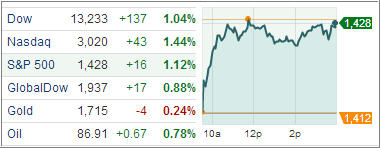
US stock ETFs started November on a strong note with the major benchmark indexes rallying more than one percent, the most in seven weeks, after employment and manufacturing topped estimates and consumer confidence surged to more than four-year high in October.

Economic data were mostly positive on Thursday.

Payroll processing firm ADP said 158,000 private-sector jobs were created in October, the most in eight months, the Institute for Supply Management’s US factory index rose to 51.7 in October from 51.5 a month earlier and the Conference Board’s consumer-confidence index increased to 72.2 in October – the highest since February 2008, from a downwardly revised 68.4 in September.

Separately, a Labor Department report showed weekly initial jobless claims fell by 9,000 to a seasonally adjusted 363,000 pace last week. How this all stacks up to the real unemployment data, we will find out on Friday morning.

Read More

Major Market Indexes Log First Monthly Drop Since May; Europe Meanders Amid Choppy Trade

Ulli Market Commentary Contact

[Chart courtesy of MarketWatch.com]

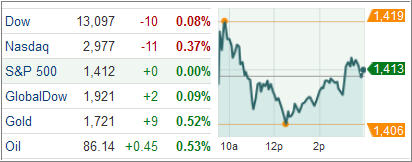
US stock indexes logged their first monthly loss since May with the S&P 500 retreating 2.01%, capping a weak month on a mixed note Wednesday after markets reopened following a two-day closure due to super-storm Sandy.

Economic data was relatively light with the Chicago Purchasing Manager’s Index data for October printing at 49.9 from 49.7 in the prior month, still in the ‘contractionary’ region and signaling weakness in the manufacturing sector for the second straight month. Readings above 50 indicate expansion.

Stocks in the construction and housing sectors are likely to rise due to the massive rebuilding that will follow after Hurricane Sandy. However, odds are insurance companies will suffer as markets try to figure out the earnings hit the sector will take in the fourth quarter.

Read More

7 ETF Model Portfolios You Can Use – Updated through 10/26/2012

Ulli Model ETF Portfolios Contact

Due to this week’s closure of the markets on Monday and Tuesday, as a result of hurricane Sandy, all ETF model portfolios have been updated through last Friday, October 26.

Since this only represents 3 days of data, during which the S&P 500 ended up literally unchanged, the models moved only slightly.

Hopefully, we’ll be back to a normal schedule come next Wednesday, which I am sure will offer some fireworks being the day after the election.

Here’s the latest update to our ETF Model Portfolios:

Read More

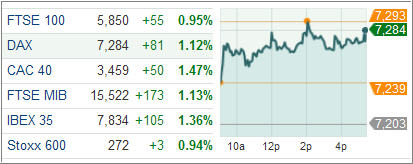
US Markets To Reopen Wednesday; BP, Deutsche Bank Lift Europe

Ulli Market Commentary Contact

[Chart courtesy of MarketWatch.com]

Traders are bracing for a volume surge Wednesday when US stock markets reopen after being shuttered for two days to deal with the devastating effects of Hurricane Sandy that triggered an unexpected shutdown on Wall Street.

An average of 3.5 billion shares have been changing hands everyday throughout much of the month, but traders say that could double Wednesday, which also happens to be the last trading day of the month, a time when traders and fund managers often square up their positions.

Meanwhile the US dollar weakened Tuesday over expectations that the damage wrought by Super storm Sandy will prompt the Federal Reserve to maintain its expansionary policies, robbing the greenback of its safe-haven status. The Bank of Japan’s announcement that it would expand its own asset purchase program proved insufficient to offset investors’ apprehension as Wall Street tries to recover from one of the biggest natural disasters in recent memory.

Read More