1. Moving the Markets
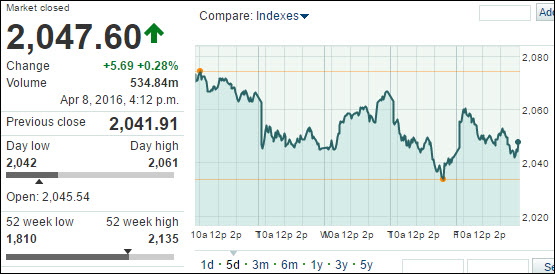
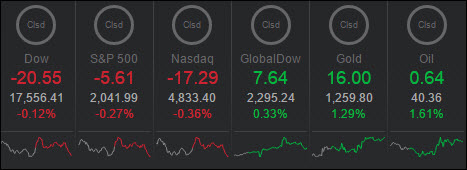
All three U.S. benchmarks began the day in positive ground, before sliding back. About mid-afternoon, they faltered into negative territory, ending at session lows by the closing bell.
The buzz of late has been all about earnings expectations and how the market will react. If earnings come in negative in the January-March quarter as expected, it will mark the third straight quarter of negative growth. Profits were hurt by financial turbulence, a strong dollar that hurt sales of U.S. multinationals and the continuing fallout from low prices in the energy patch.
The unofficial kickoff to earnings season came after the closing bell when aluminum giant Alcoa (AA) reported its results, which topped analysts’ sharply crushed expectations. While revenues fell 15% YOY, a 6% gain was offset by a 21% decline caused by low aluminum prices and a strong dollar. This was accomplished via extremely creative accounting magic, as you can read here.
Moving forward, let’s keep in mind that Wall Street will be closely watching financials, commodities and the impact of the dollar on corporate profit results. Financials face continued headwinds due to a small gap between short-term and long-term interest rates, as well as early-year market turbulence that negatively impacted trading results. And despite a sharp recovery in energy prices, analysts continue to mark down earnings in the energy sector as non-performing loans are looming on the horizon.
 The VIX (volatility index) should be at 20 and the S&P 500 index should be at 1,970 said Julian Emanuel, US equity and derivatives executive director at UBS. Investors need to remind themselves that the current environment is different from the past 3 ½ years; it’s a high-volatility environment.
 The fund-of-funds investment strategy has become quite popular among investors and exchange traded fund managers have been quick to get off the block in order to capitalize on the growing trend.