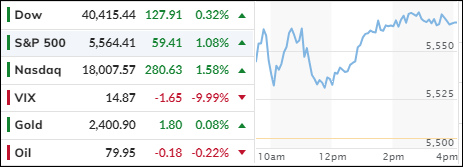
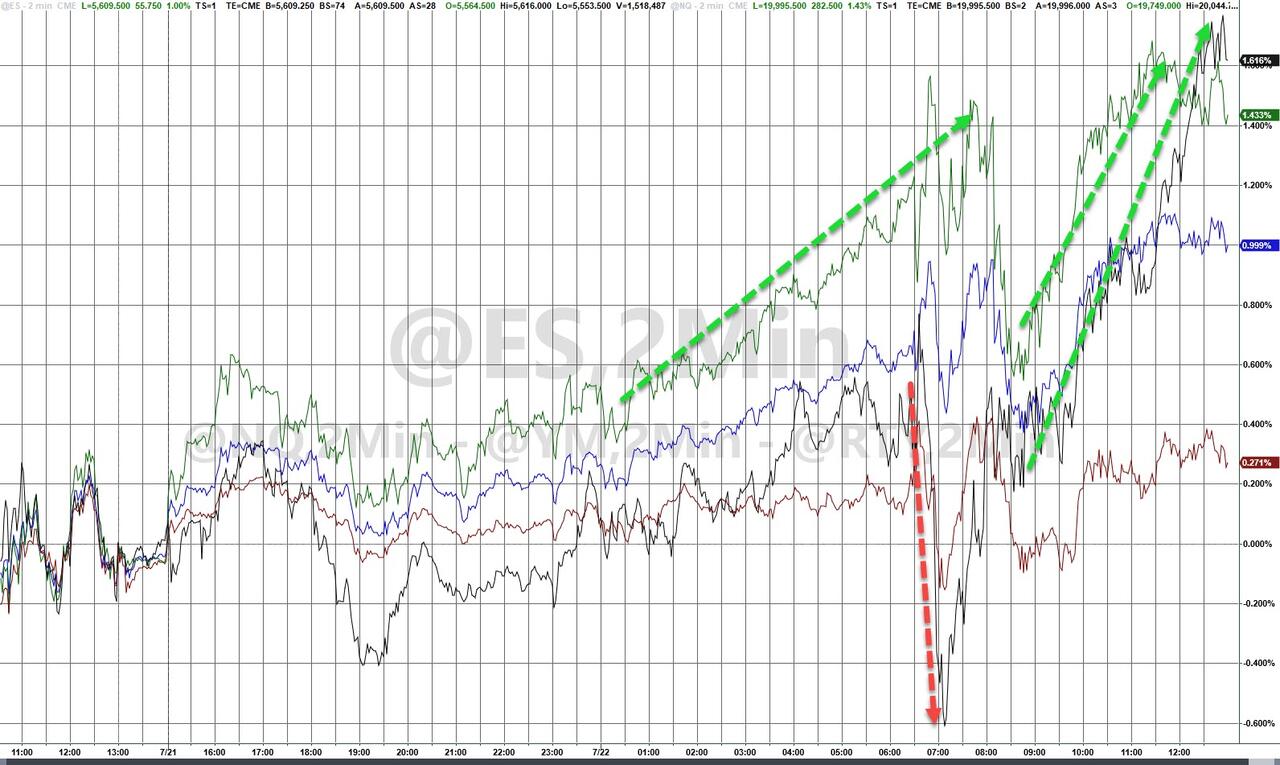
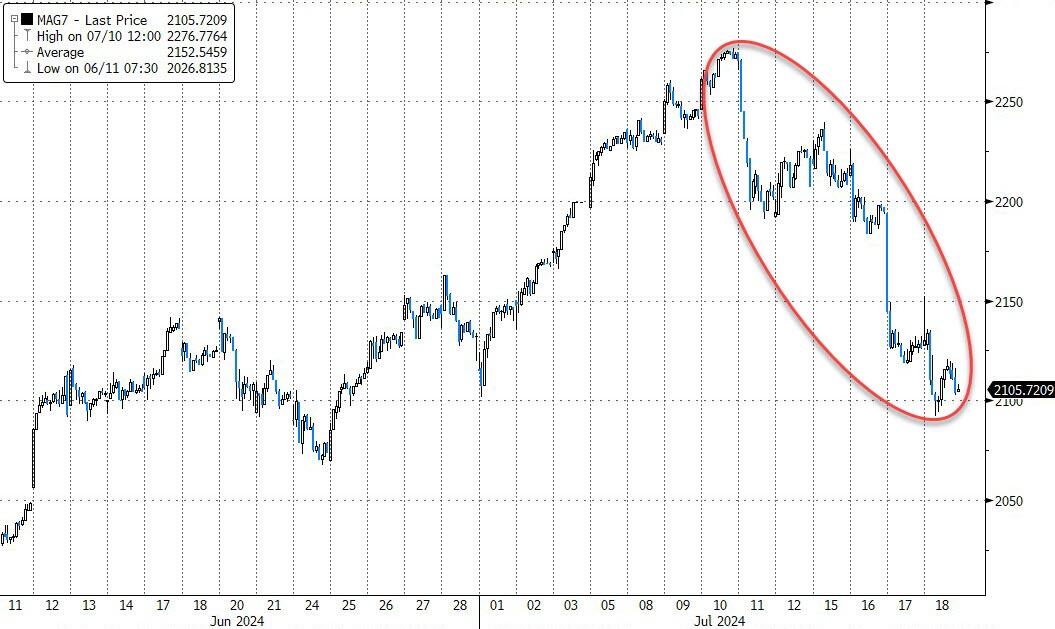
This morning, the tech sector regained some footing after a recent decline, helping to lift the major indexes. Nvidia led the charge with a 4% gain, recovering some of its losses from last week, followed by Meta, Alphabet, and Apple.
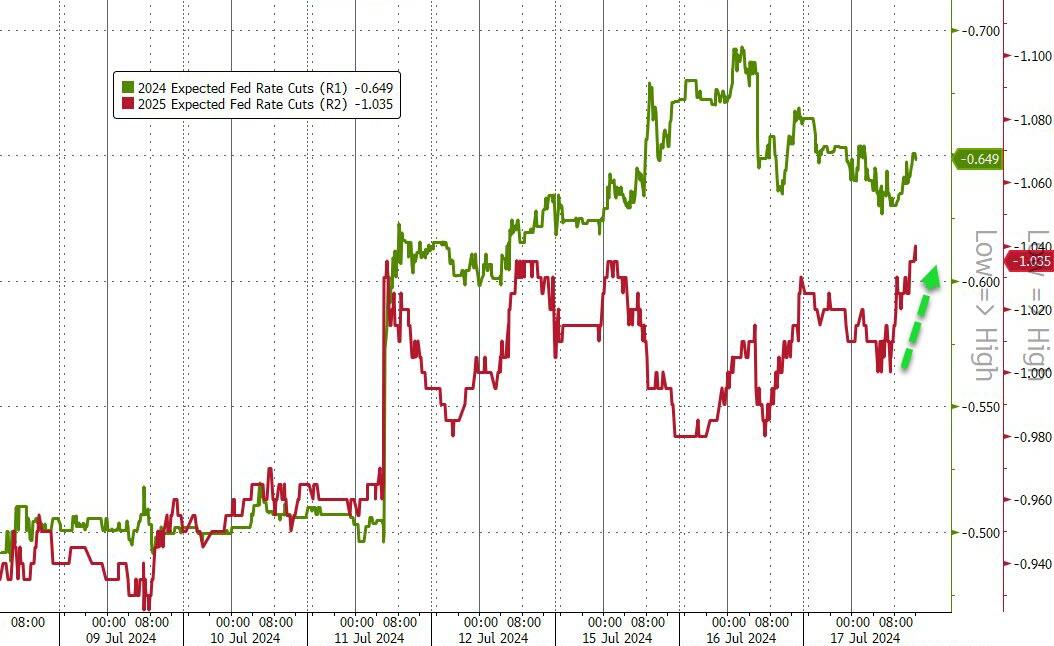
Traders are navigating a complex landscape, with factors ranging from Biden’s withdrawal to earnings reports, and central bank policies. The probability of the Federal Reserve cutting rates at their September meeting has now increased to 93%.
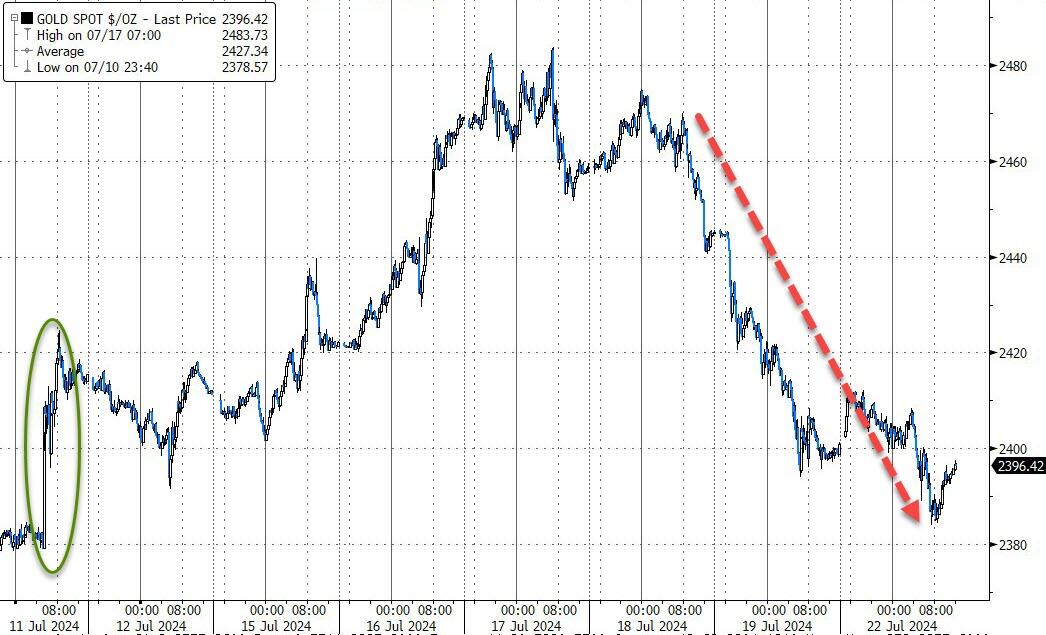
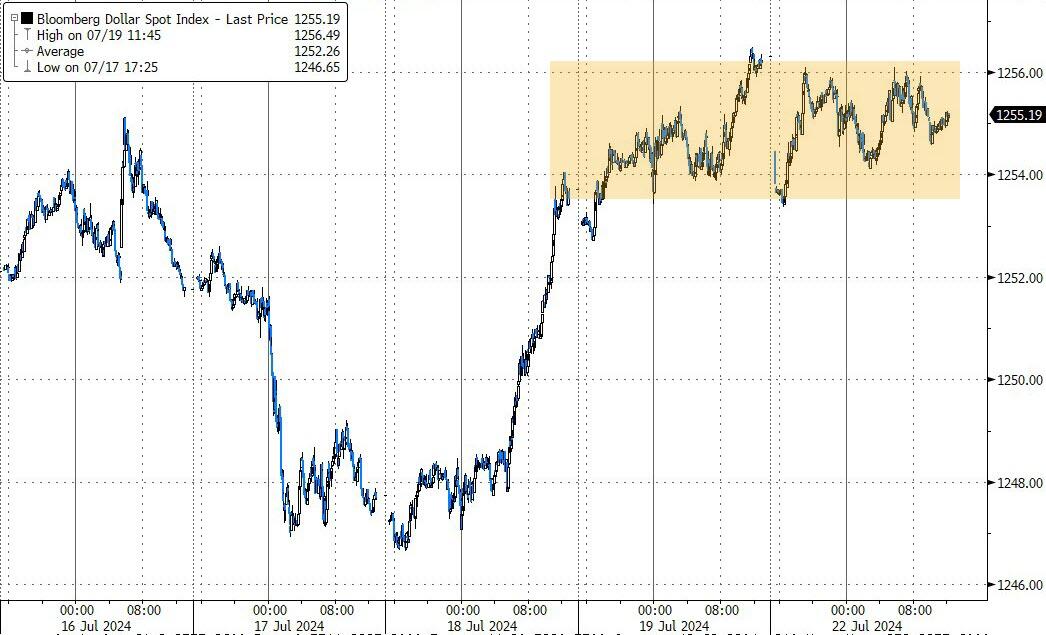
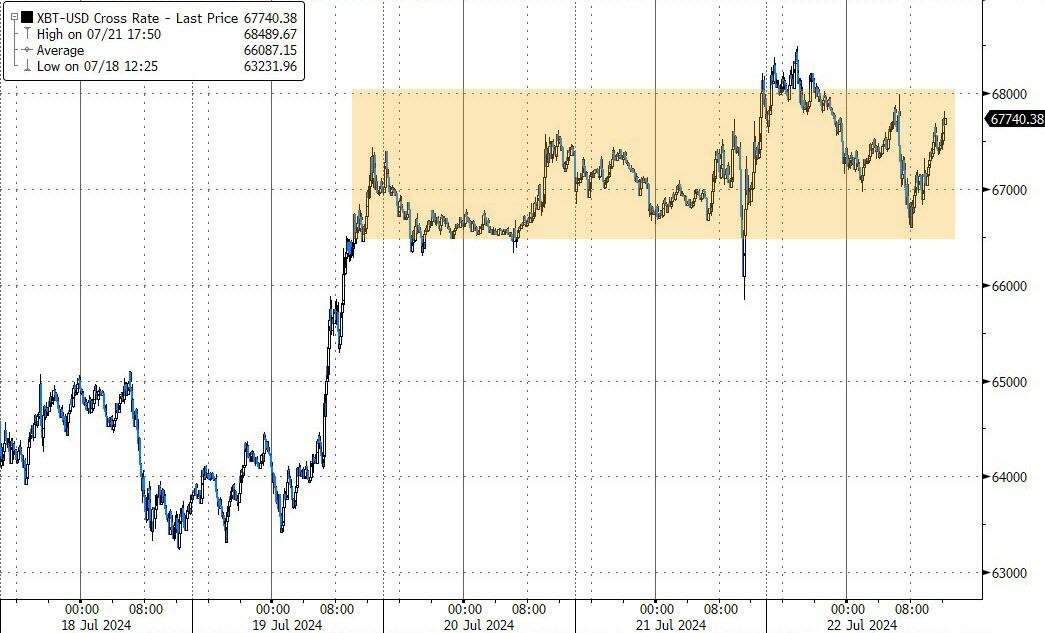
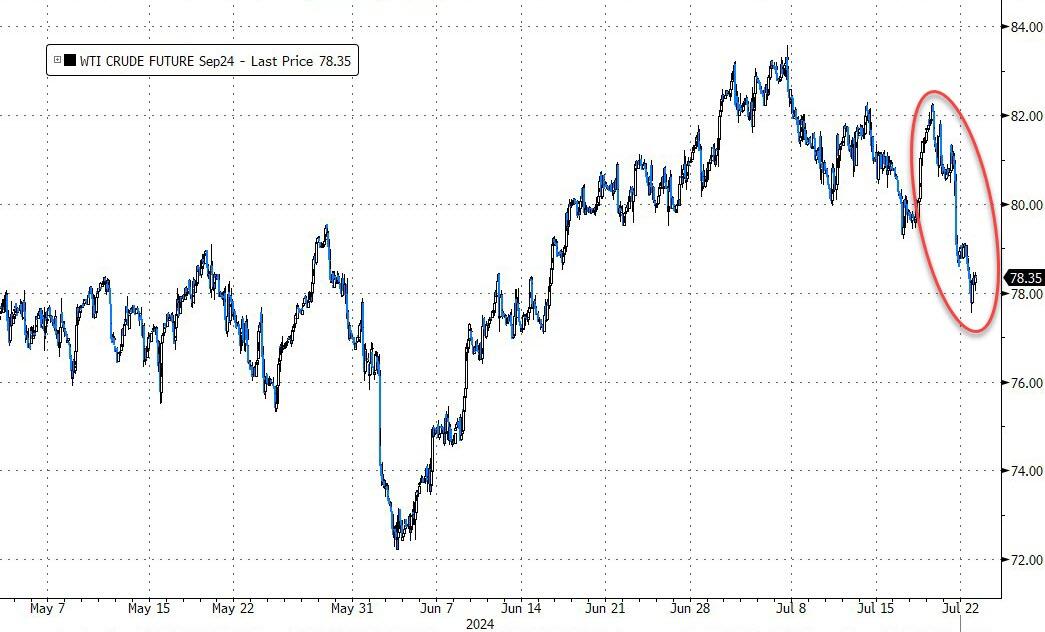
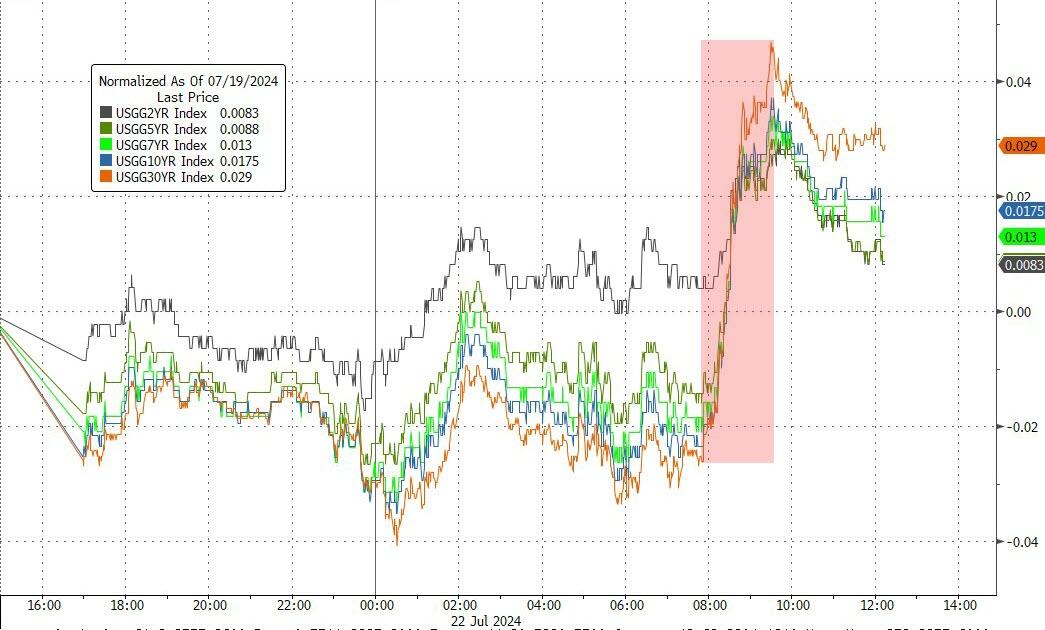
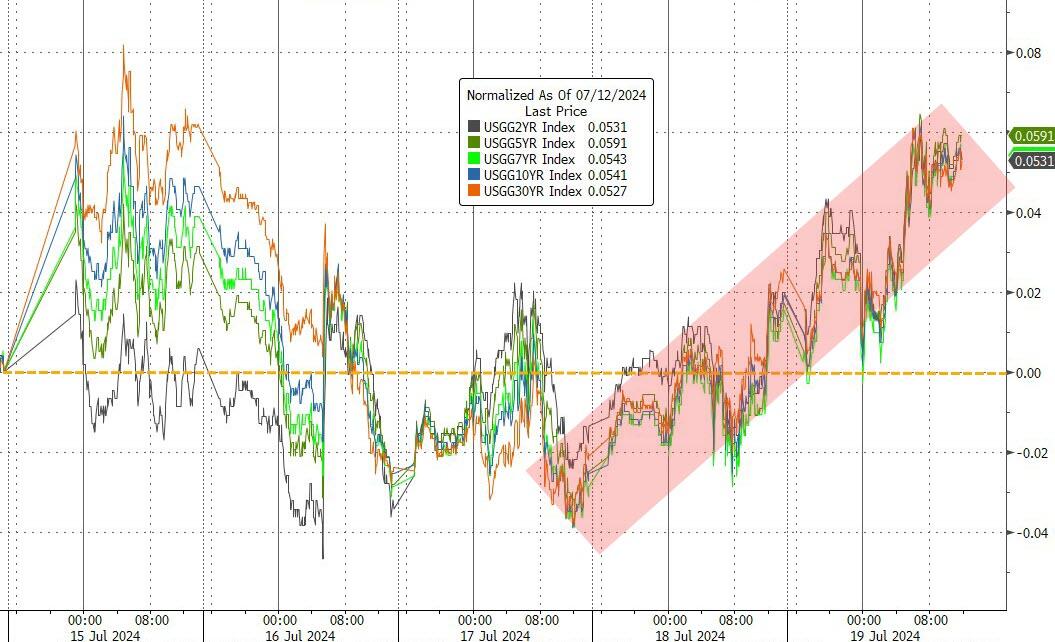
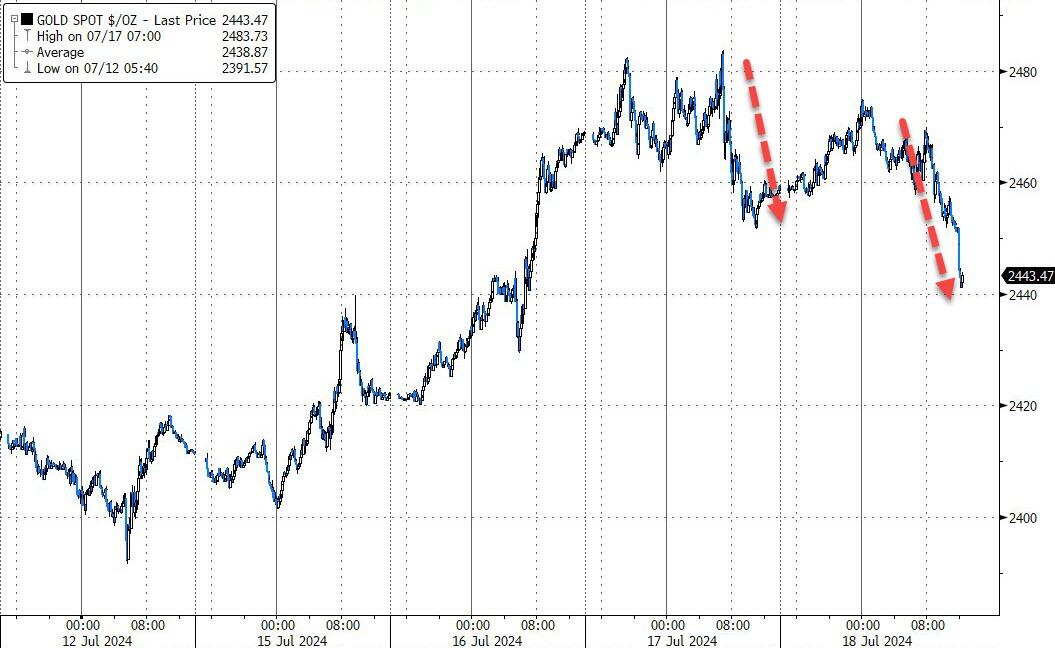
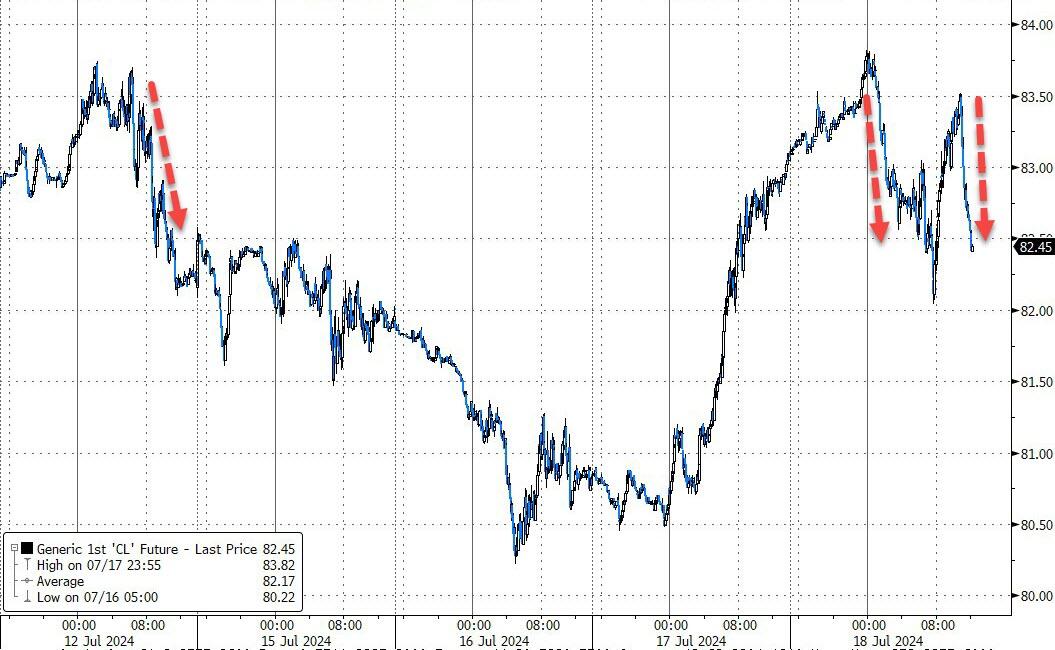
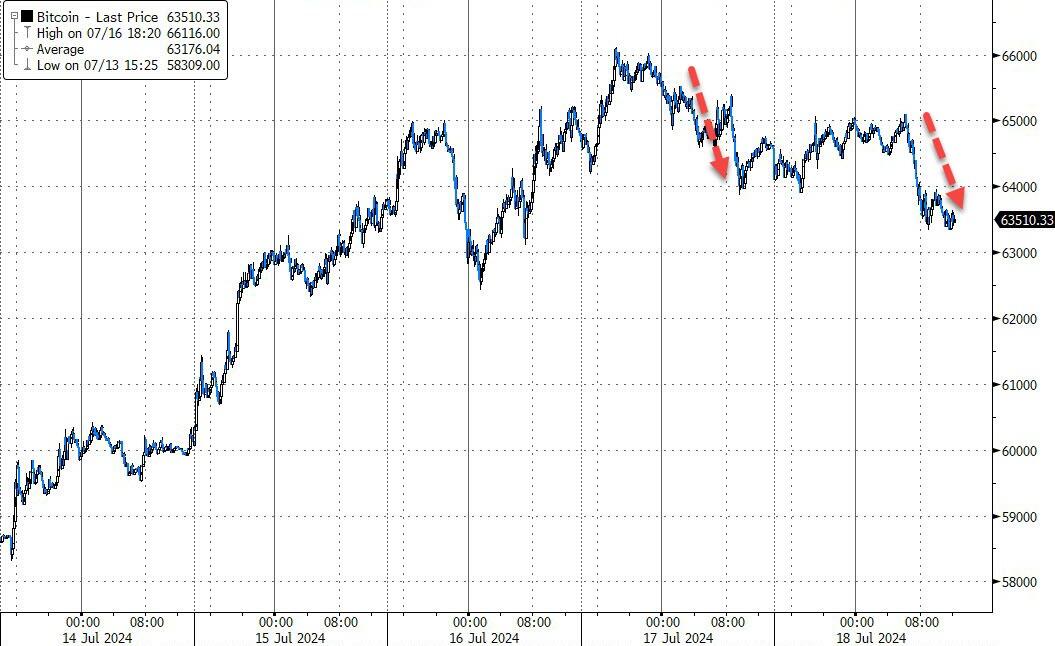
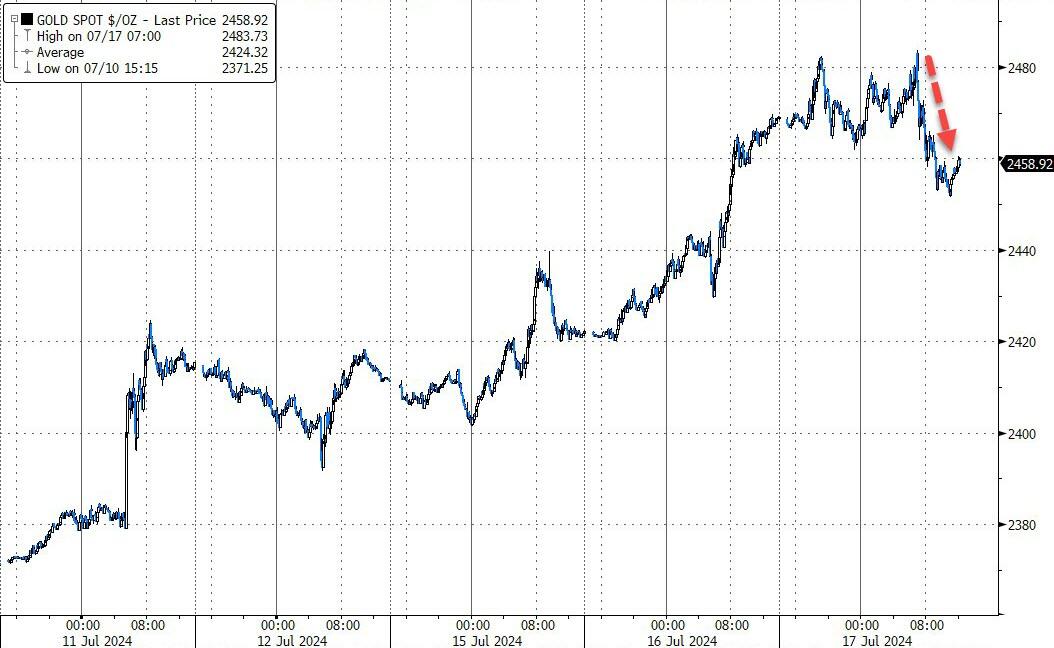
Outside of stocks, the markets were relatively calm. Gold drifted lower, the dollar remained stable, Bitcoin traded within its $67k to $68k range, crude oil slipped below the $80 mark, and bond yields rose moderately.
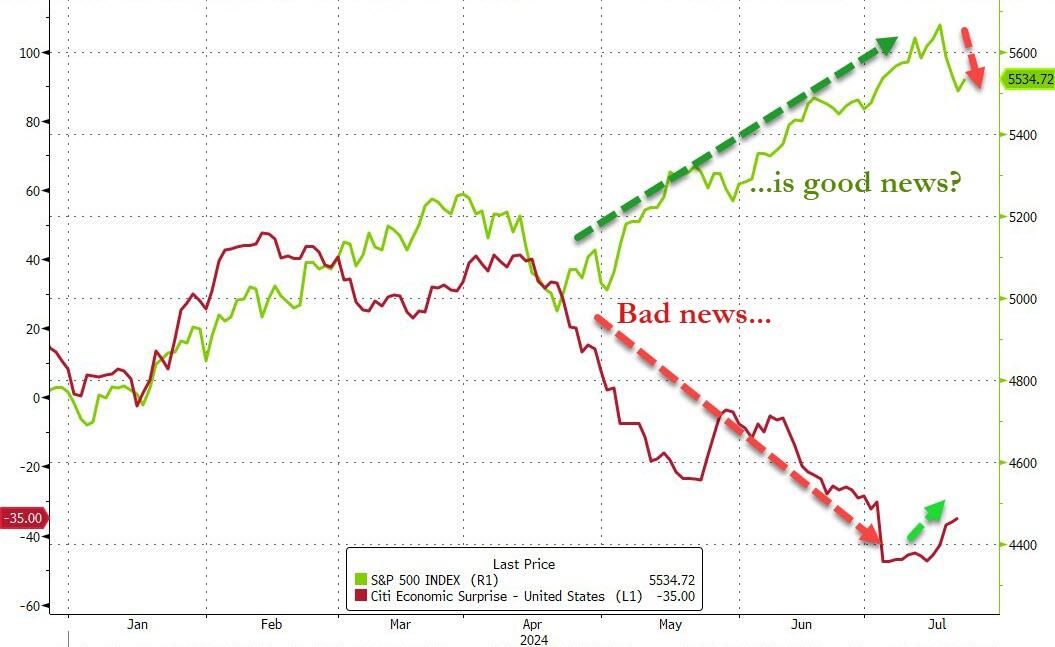
The economy appears to be slowing down, but as we’ve seen before, “bad news can be good news” for the markets.
However, this trend could reverse at any time, as illustrated by ZH’s chart.
Do you want to know which ETFs are hot and which ones are not? Then you need my High-Volume ETF Cutline report. It tells you how close or far each of the 311 ETFs I follow is from its long-term trend line (39-week SMA). These are the ETFs that trade more than $5 million a day, so they are not some obscure funds that nobody cares about.
The report is split into two parts: The winners that are above their trend line (%M/A), and the losers that are below it. The yellow line is the line of shame that separates them. You can see how many ETFs are in each group and how they have changed since the last report (283 vs. 276 current).
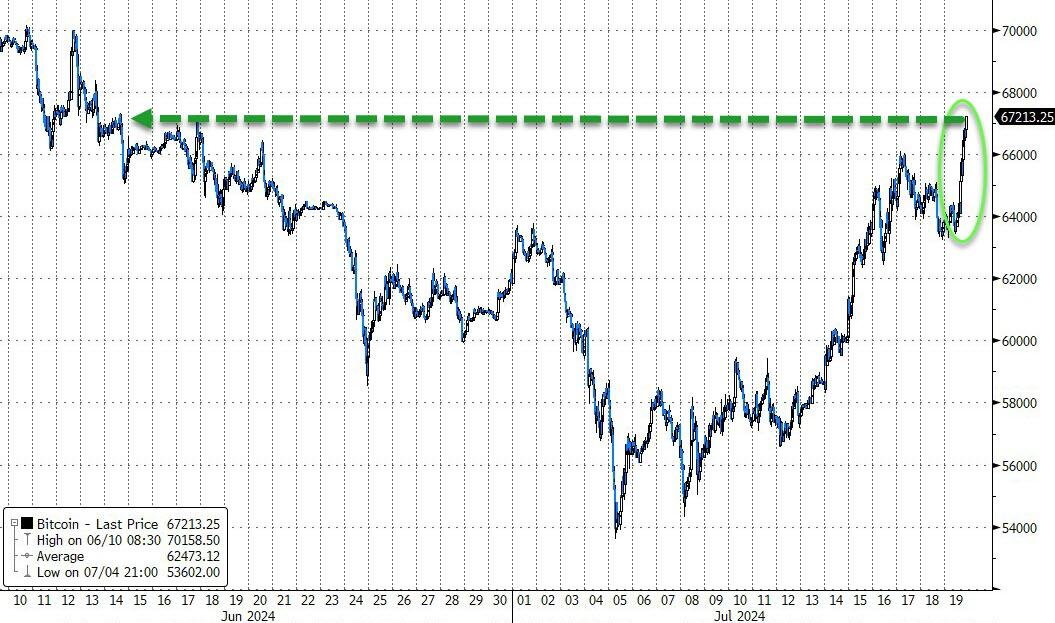
BITCOIN BREAKS $67K AS TECH STOCKS FALTER AND BOND YIELDS RISE
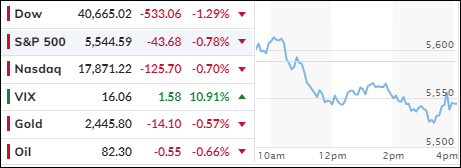
[Chart courtesy of MarketWatch.com]
Moving the markets
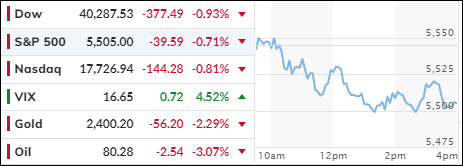
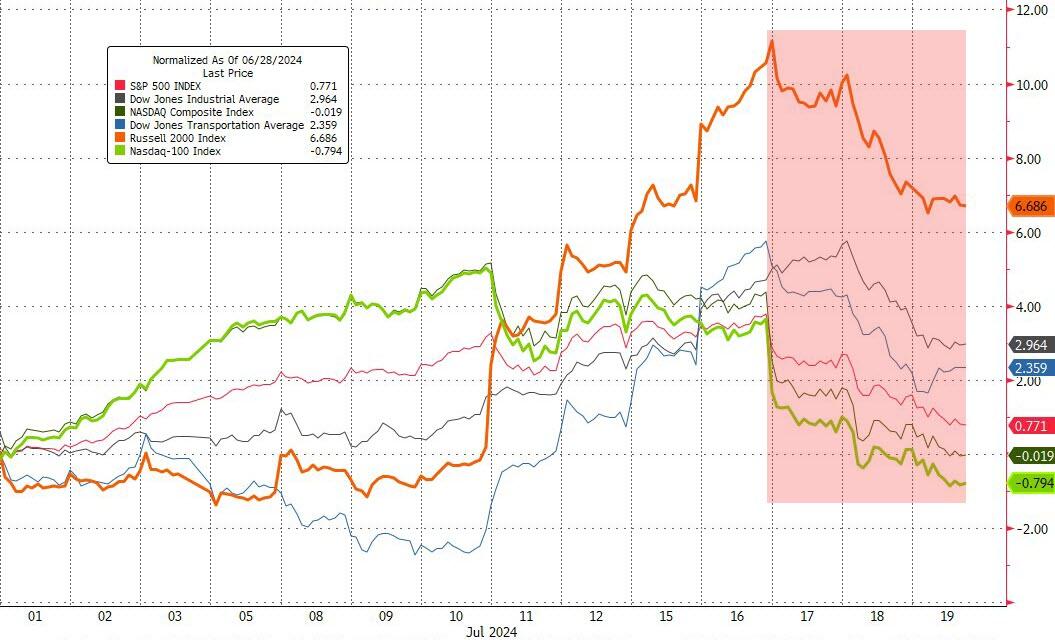
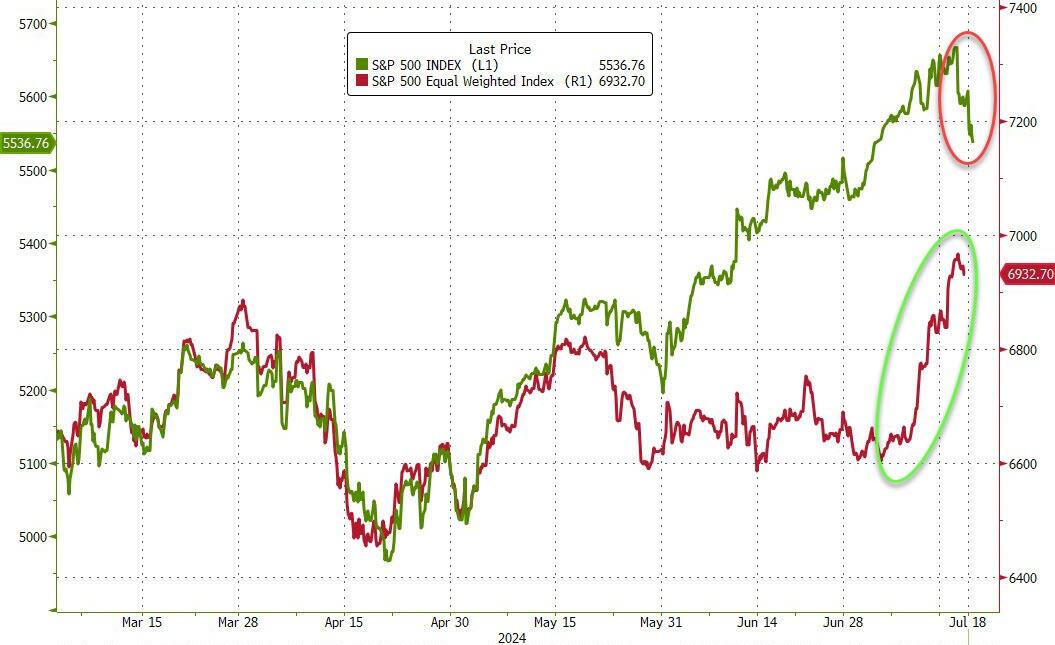
The downward trend persisted today, leaving traders likely relieved that the week is finally over. Earlier hopes for an easing of interest rates had prompted a rotation out of tech stocks and into broader markets like Small Caps, which stand to benefit the most from such policy changes.
However, when considering the bigger picture, this week’s losses were moderate compared to the gains the major indexes have accumulated year-to-date. The S&P 500 ended the week down around 2%, marking its worst performance since April, while the Nasdaq slipped over 3%. These declines were somewhat offset by the Dow’s 0.6% advance and the Small Caps’ 2% gain.
The shift away from technology stocks was necessary, as traders and investors had become overly reliant on a few high-performing stocks. The reality set in that this dependence is unsustainable, and for any bullish scenario to be maintained over time, the broader market must participate.
Adding to the market’s woes, today’s significant IT outage, with CrowdStrike unintentionally hinting at the possible existence of an internet kill switch with global impact, did not inspire confidence among traders.
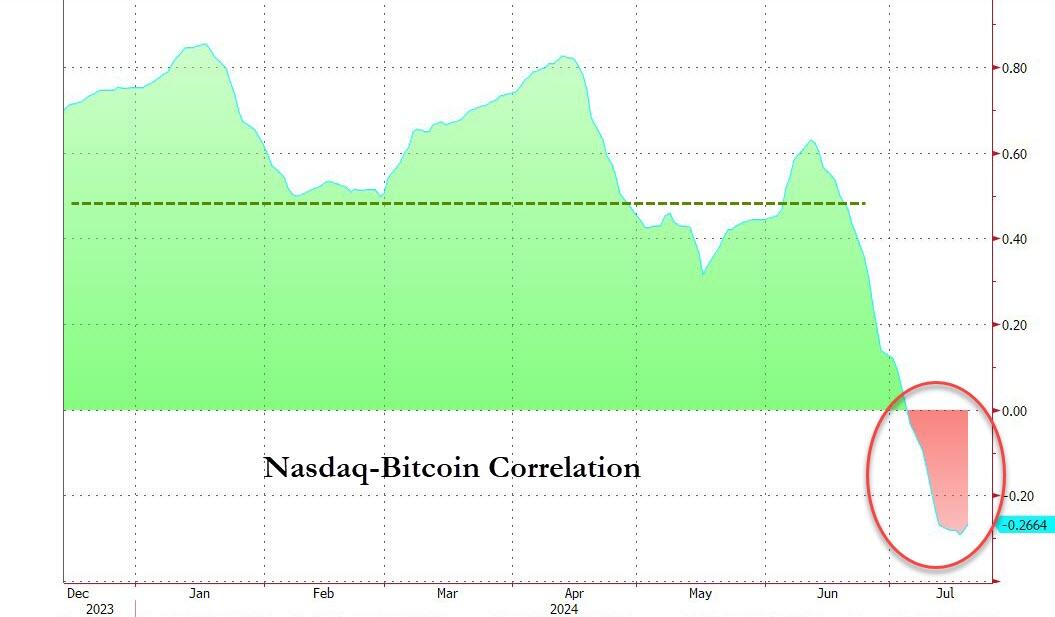
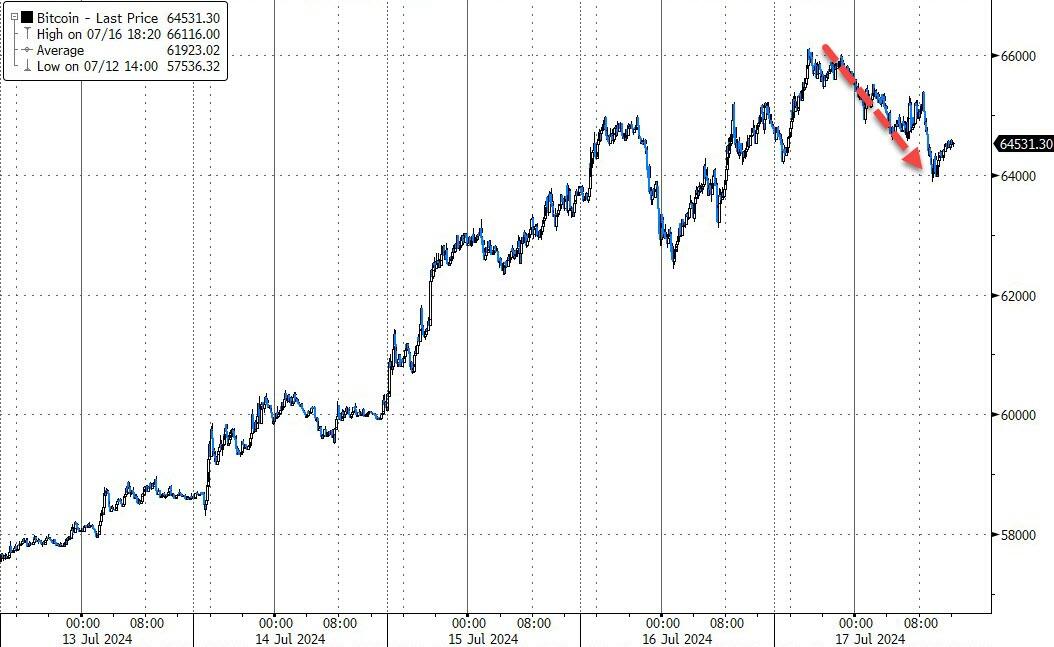
Despite this week’s pullback affecting all indexes, Small Caps remain the clear winner for July with an almost 7% gain, while the Nasdaq has dipped slightly into the red. Bond yields rose, and Bitcoin rallied for the second consecutive week, climbing above $67k for the first time in six weeks, decoupling from its strong correlation with the tech sector.
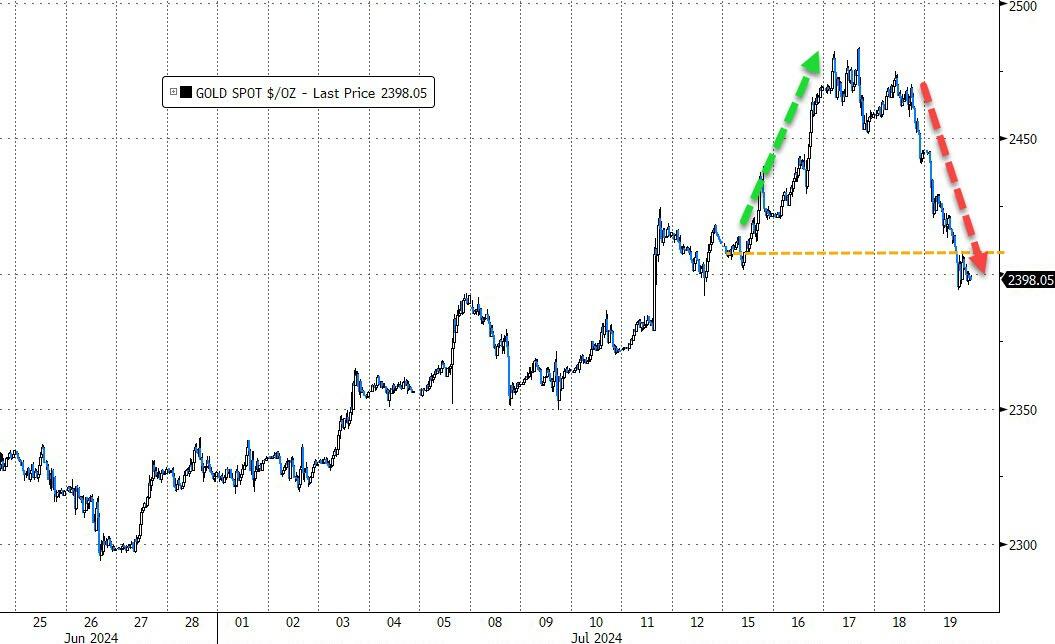
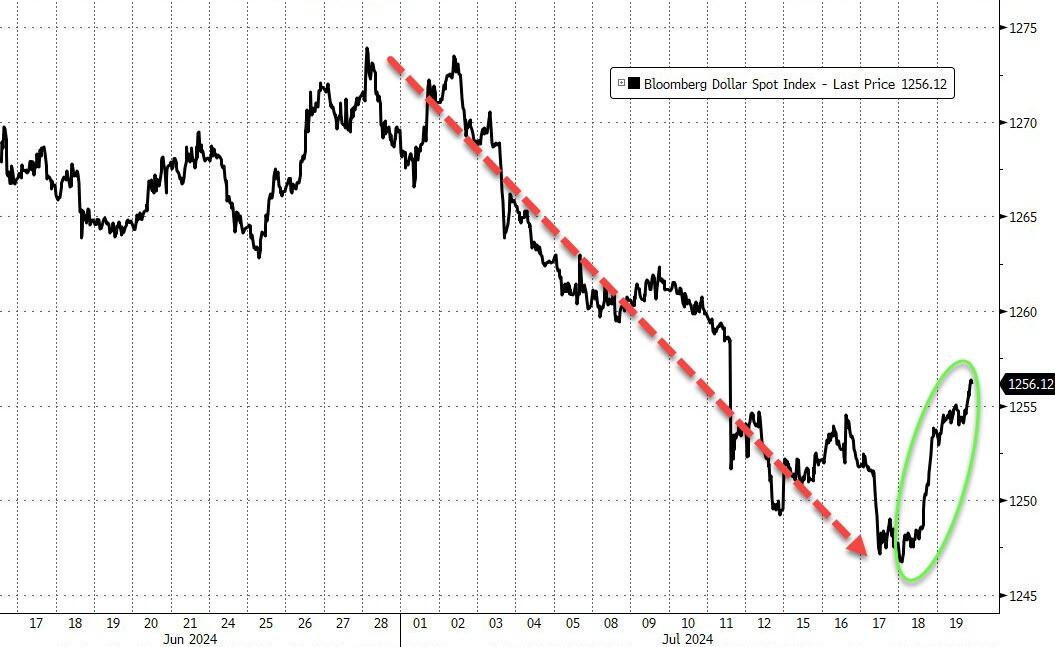
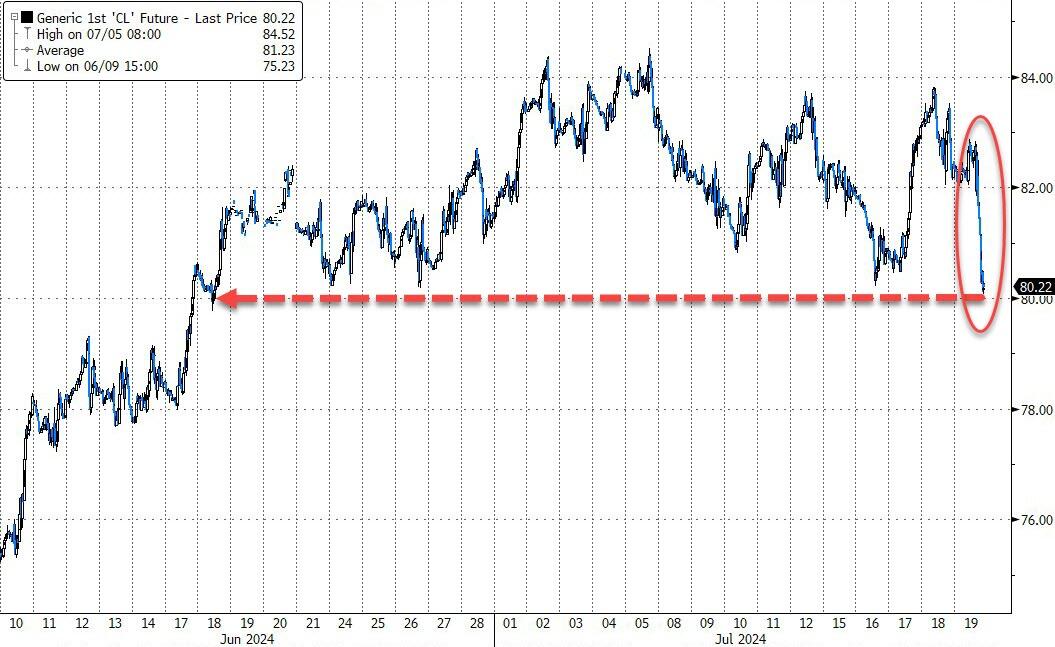
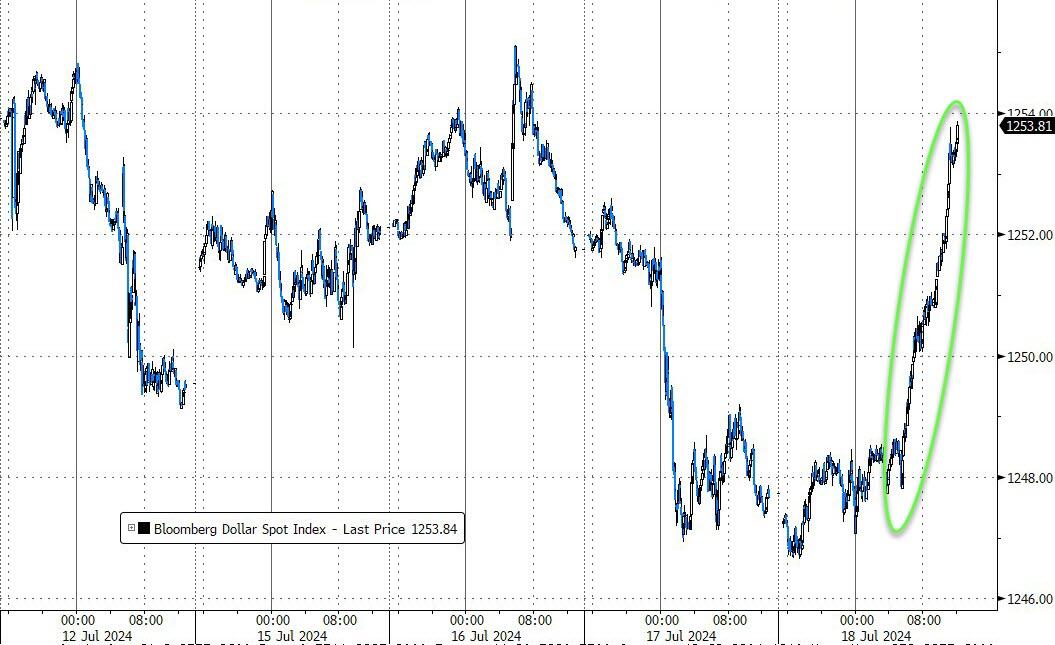
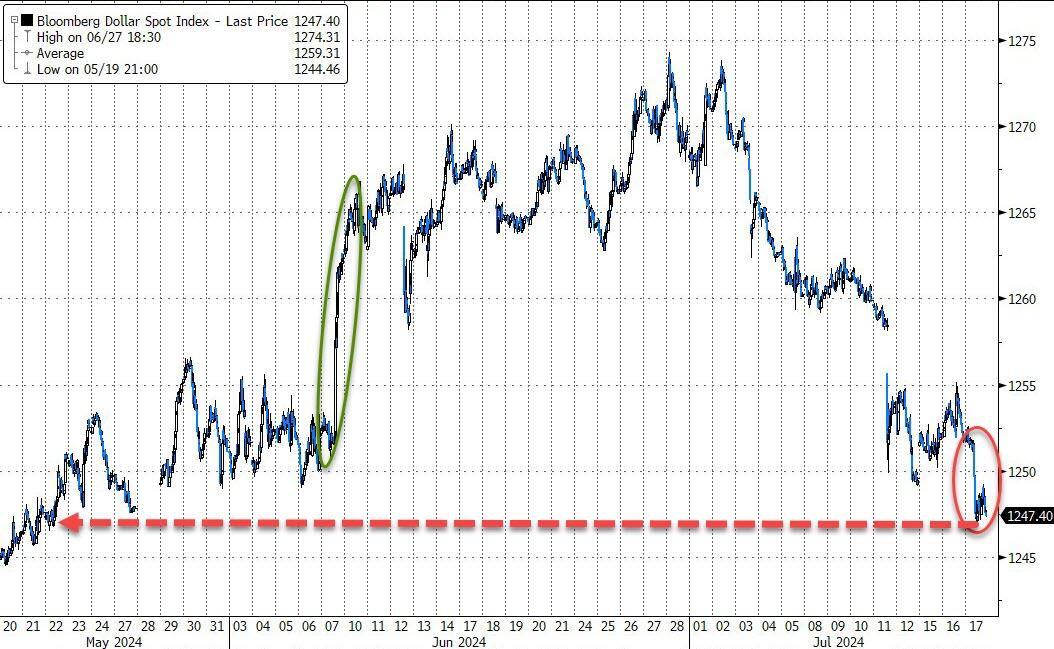
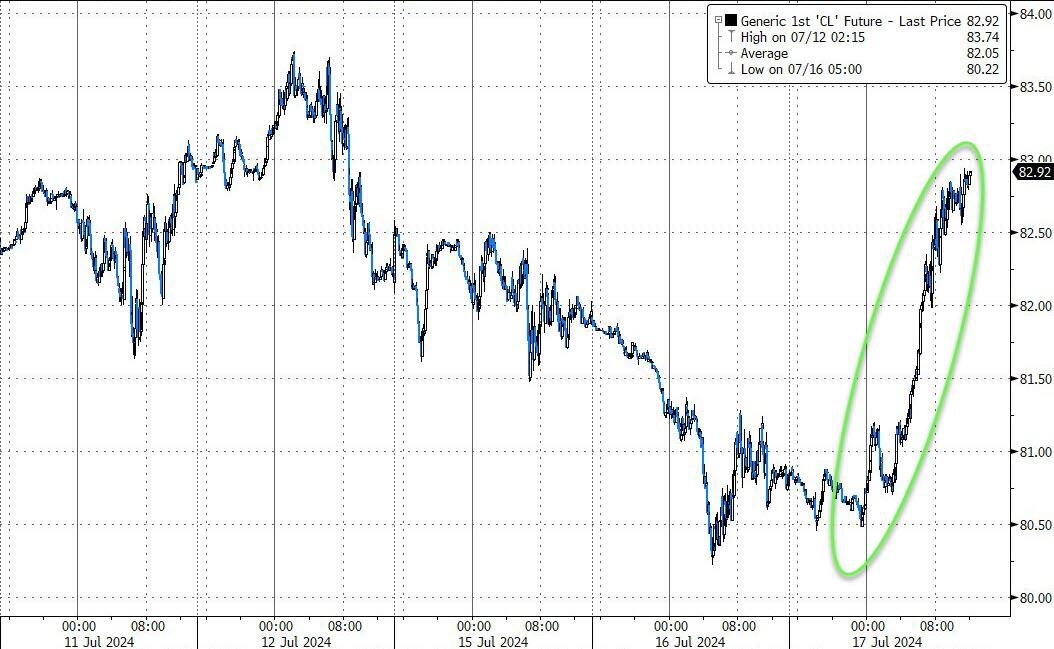
Gold struggled, giving back all its early-week gains and ending the week nearly unchanged. Meanwhile, the dollar found a bottom and had its best week since early June, which negatively impacted crude oil, pushing it back to the $80 level.
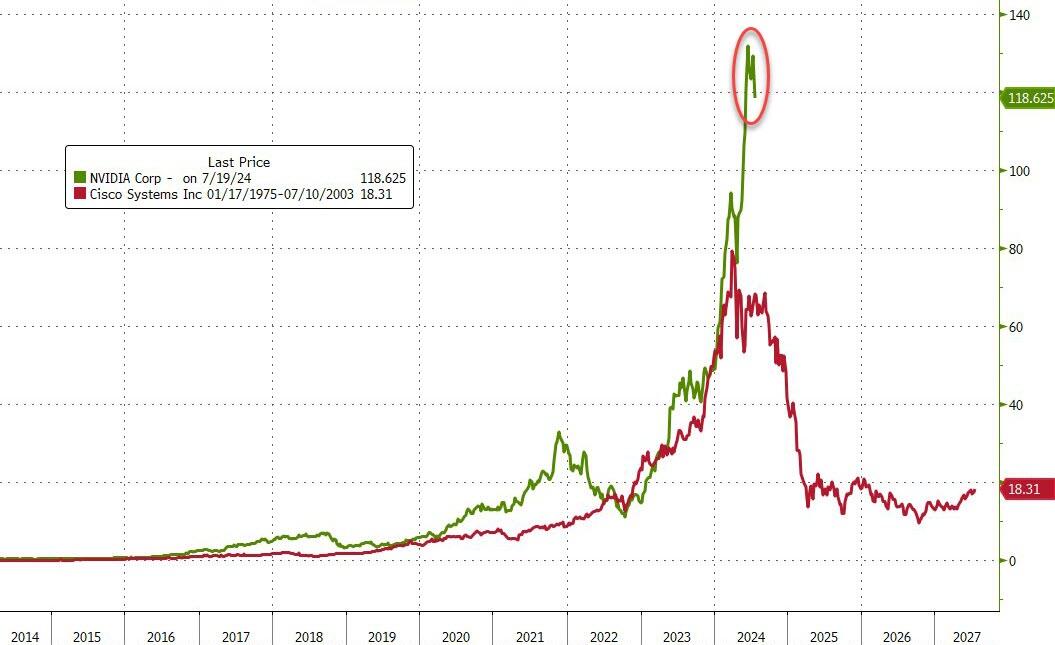
Reflecting on historical precedents, such as the comparison between Cisco Systems and Nvidia, I wonder: Will reality eventually overcome the current hype?
Out of the 1,800+ ETFs out there, I only pick the ones that trade over $5 million per day (HV ETFs), so you don’t get stuck with a lemon that nobody wants to buy or sell.
Trend Tracking Indexes (TTIs)
These are the main indicators that tell you when to buy or sell Domestic and International ETFs (section 1 and 2). They do that by comparing their position to their long-term M/A (Moving Average). If they cross above, and stay there, it’s a green light to buy. If they fall below, and keep going, it’s a red light to sell. And to make sure you don’t lose your shirt if things go south, I also use a 12% trailing stop loss on all positions in these categories.
All other investment areas don’t have a TTI and should be traded based on the position of each ETF relative to its own trend line (%M/A). That’s why I call them “Selective Buy.” In other words, if an ETF goes above its own trend line, you can buy it. But don’t forget to use a trailing sell stop of 12%, or less if you’re feeling nervous.
If some of these words sound like Greek to you, please check out the Glossary of Terms and new subscriber information in section 9.
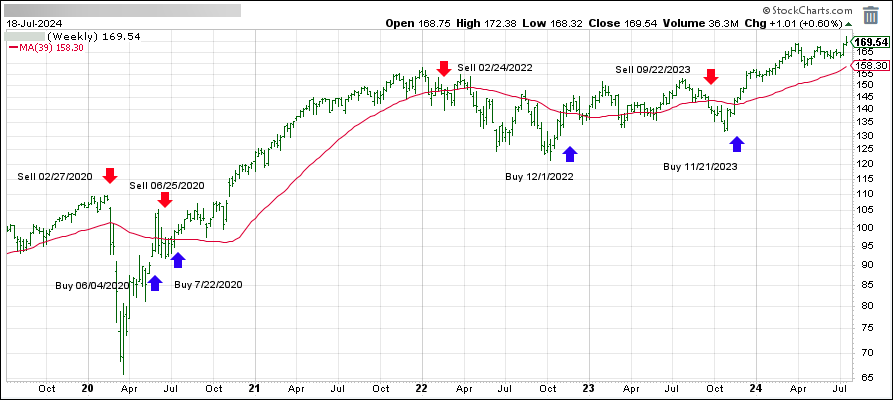
DOMESTIC EQUITY ETFs: BUY— since 11/21/2023
Click on chart to enlarge
This is our main compass, the Domestic Trend Tracking Index (TTI-green line in the above chart). It has broken above its long-term trend line (red) by +7.69% and is in “Buy” mode as posted.
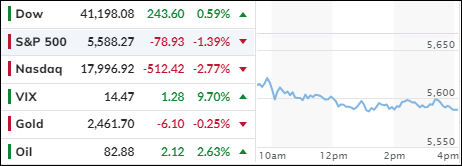
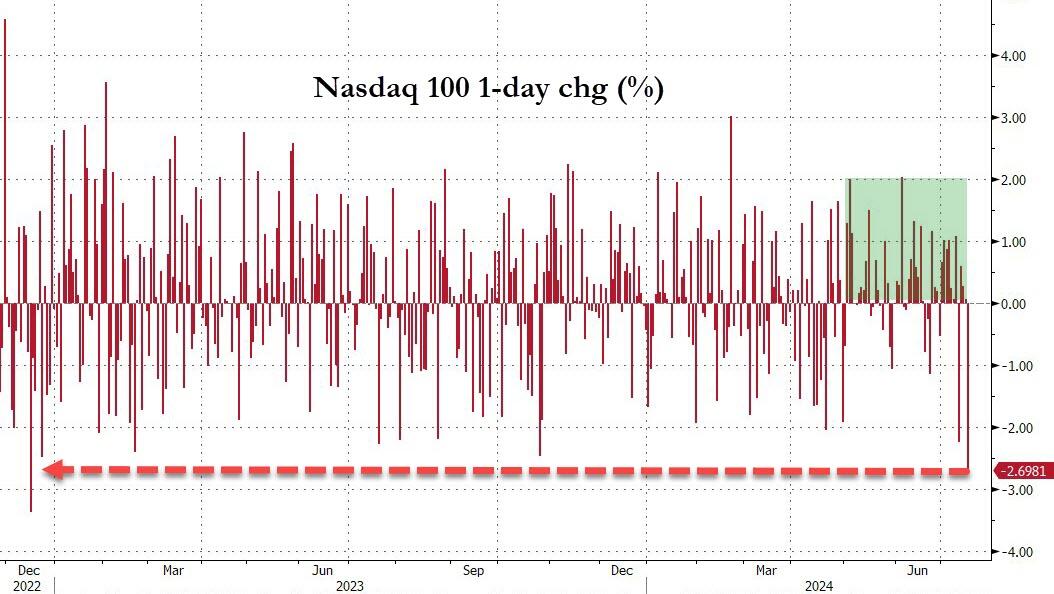
The Nasdaq and S&P 500 saw a modest rebound early in the day, with the Nasdaq attempting to recover from its worst decline in two years. However, by midday, a wave of selling pressure hit the markets, leading to a significant downturn, with the Dow suffering the most.
The sell-off in tech stocks continued, driven by the increasing likelihood that the Federal Reserve might ease off on raising interest rates in September. While this had previously supported the broader market, today saw a widespread decline across all asset classes, including Small Caps, which turned traders’ screens into a sea of red.
Over the past five trading days, Small Caps have surged more than 7%, while the tech sector has dropped over 4%. Today’s broad market plunge has raised concerns about whether the high levels of the major indexes are justified given the current weak economic environment.
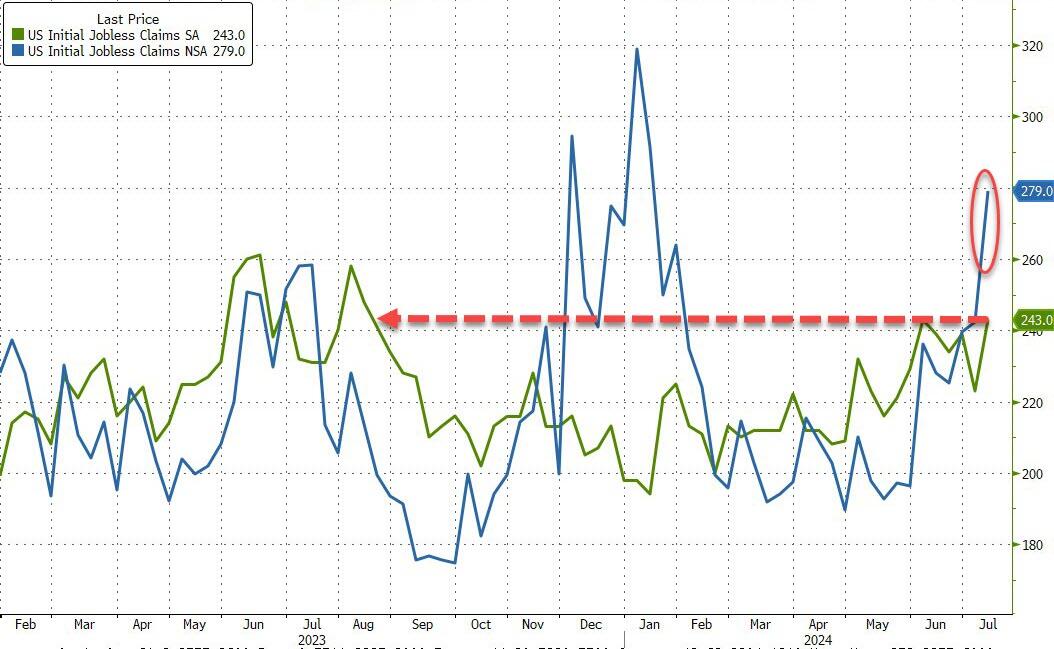
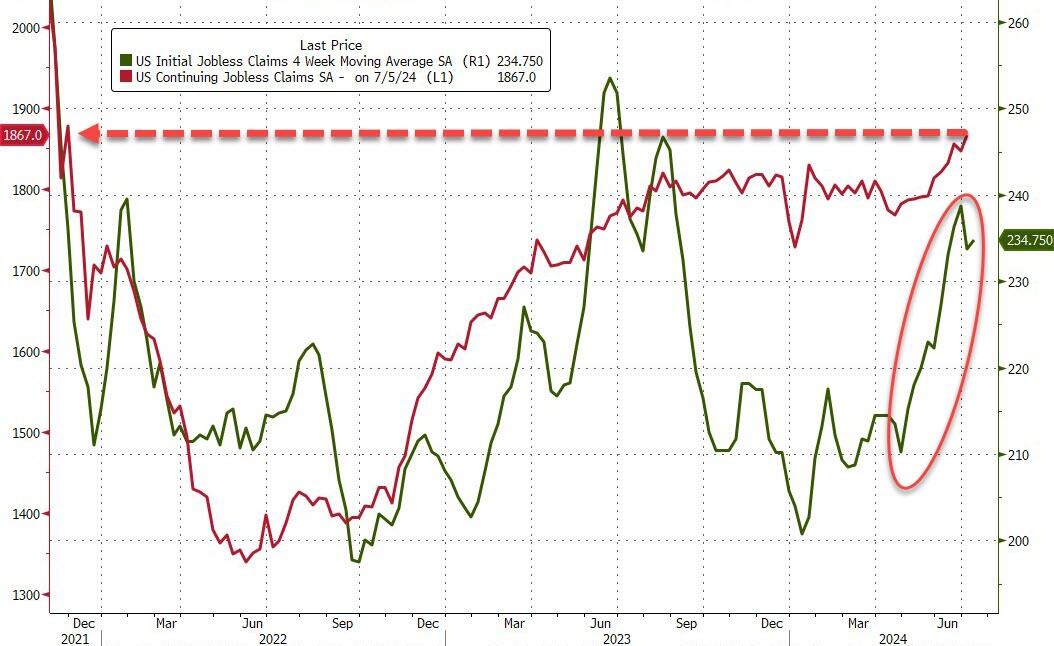
Jobless claims have now rebounded to their highest levels since August 2023, and continuing claims have spiked to levels not seen since November 2021. This is troubling news for American workers, but it remains to be seen if Wall Street will interpret this “bad” news as “good” news for the markets.
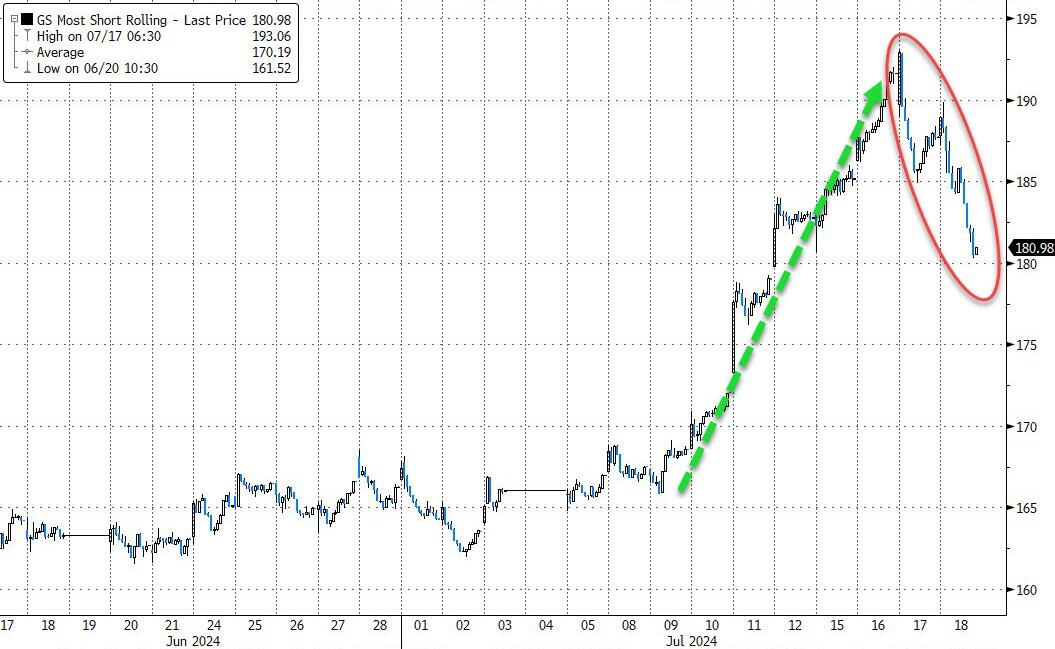
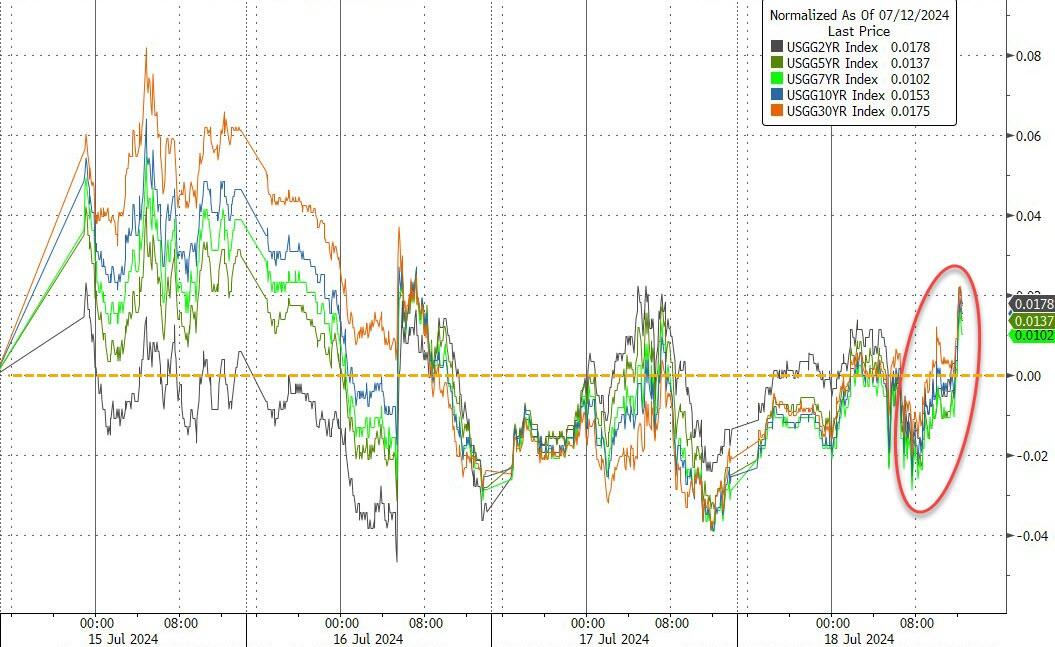
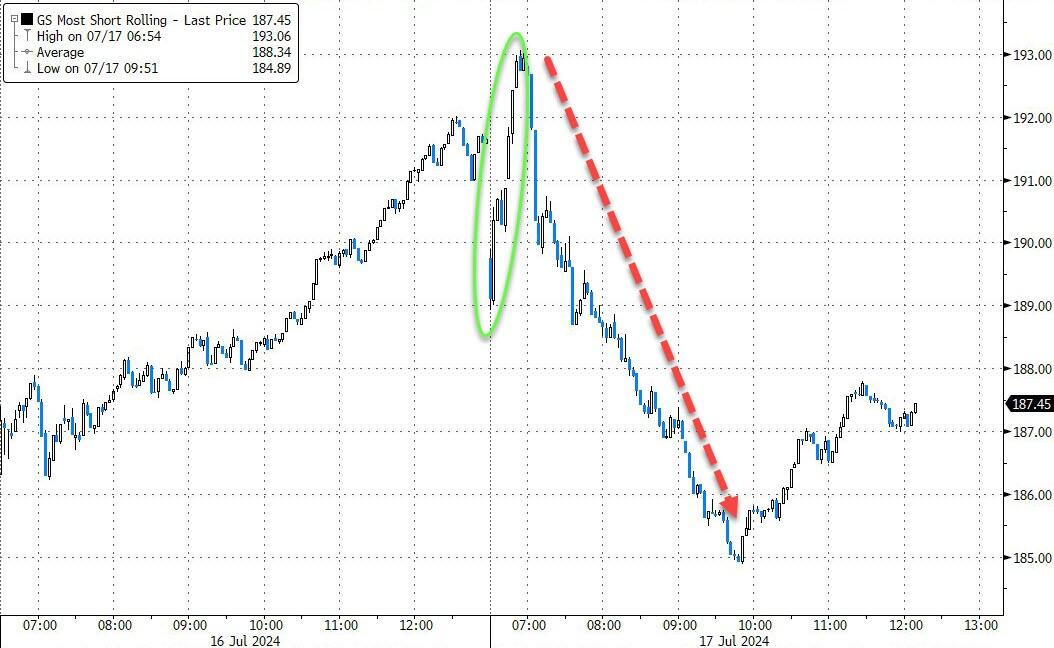
The MAG7 stocks fell to their lowest levels in a month, and the recent short squeeze lost momentum for the second consecutive day. Bond yields edged higher, gold prices declined, crude oil traded erratically, and Bitcoin struggled to gain traction. However, the dollar managed to recover from its recent slump.
Given these developments, I am wondering if current market levels are sustainable, or are we headed for a more significant correction?
Today’s market saw a continued rotation out of the tech sector, with the S&P 500 and Nasdaq retreating once again. The Nasdaq experienced its worst day in 19 months. Meanwhile, the Dow managed to stay above its unchanged line, eking out another green close.
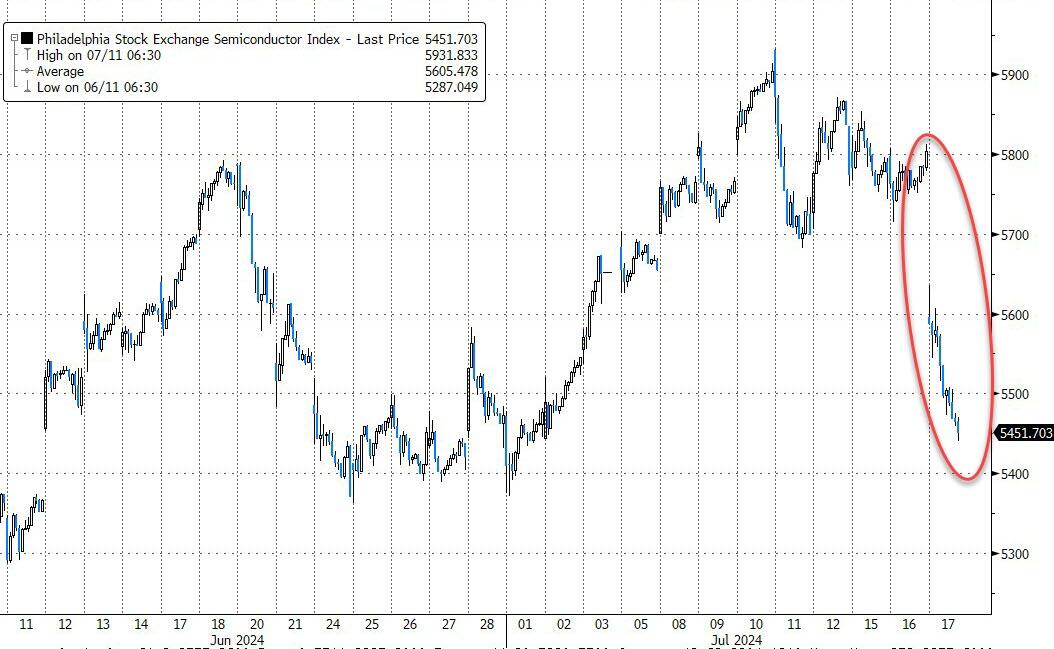
Tech giants like Apple, Netflix, Microsoft, and Meta each lost more than 1%. Given their recent impressive runs, this is only a modest correction. Nvidia, however, dropped 6%, with semiconductors facing their most significant decline since the COVID-19 lockdowns. Traders shifted their focus to Small Caps, which had rallied recently but closed lower yesterday.
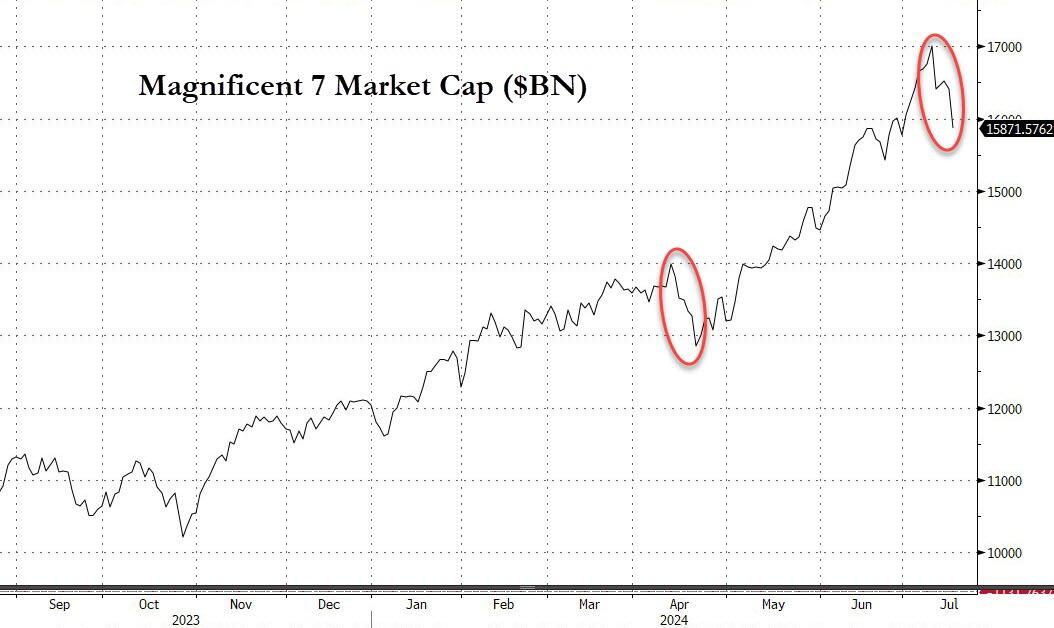
Even the MAG7 stocks were hit hard, losing an astounding $1.1 trillion in market cap. Despite this, the losses are minor compared to the sector’s overall gains.
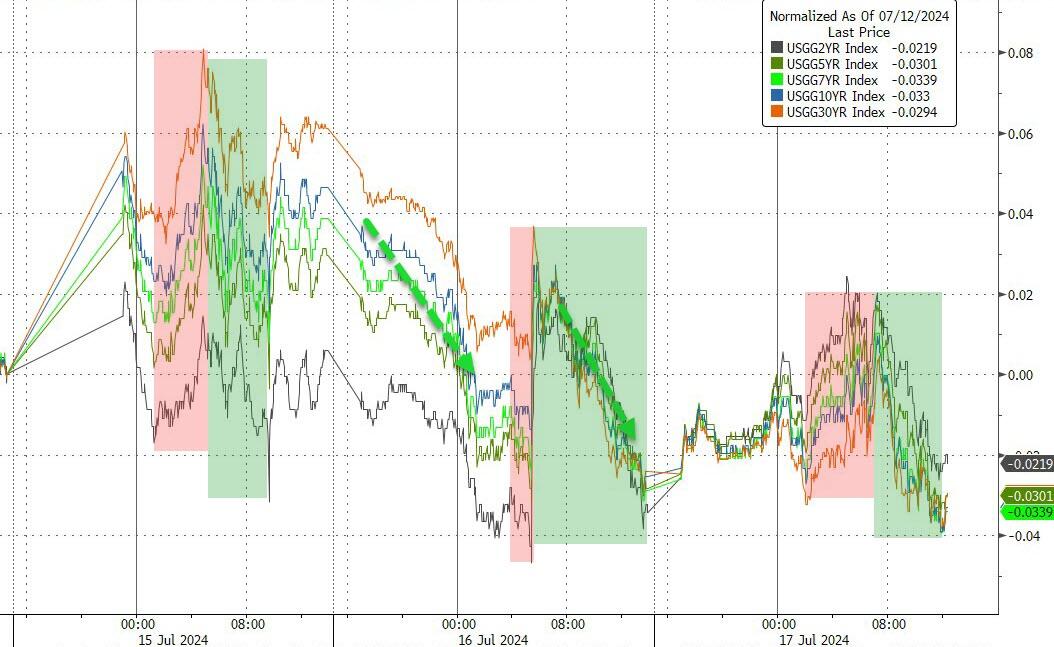
Anticipation that the Federal Reserve might lower rates has buoyed Small Caps, as lower financing costs could be beneficial. Futures markets currently imply a 100% likelihood of the Fed lowering rates in September.
The recent short squeeze reversed, bond yields were mixed, and rate-cut expectations held steady but increased for 2025. The dollar dropped to a two-month low, while crude oil recovered from its recent slump, heading towards the $83 level. Bitcoin took a breather from its recent surge, as did gold, with the precious metal coming off its all-time high.
While the bulls remain in control, economic weakness is spreading, which could be reflected in the upcoming earnings season. The extent of this impact will likely determine the future direction of the market.