Maintaining Altitude

Ulli Market Commentary Contact

[Chart courtesy of MarketWatch.com]

  1. Moving the markets

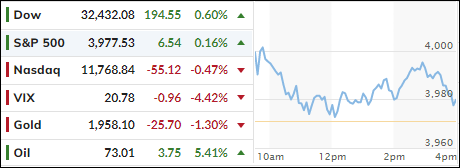
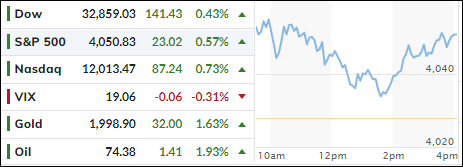
Again, the belief prevailed on Wall Street that the worst of the regional banking crisis is now in the rearview mirror, which caused traders and algos to push the major indexes higher for the second day in a row.

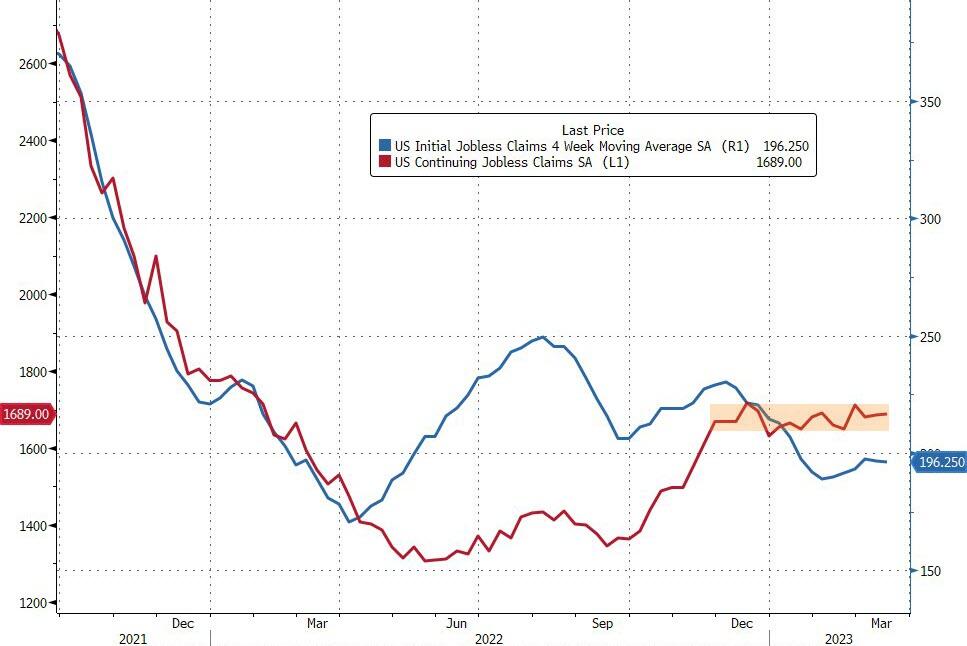
Jobless claims dropped moderately but have not gone anywhere in four months, thereby supporting hopes that the Fed might be inclined to slow down its tightening efforts, as the labor market appears to show signs of cooling, which in turn gave an assist to equities.

To me it looks like the market is getting ahead of itself by pricing in a Goldilocks scenario, in which we would see the best of both worlds: Traders expecting a recession with low rates and reduced inflation in an environment that does not negatively affect corporate earnings.

Sure, such a setting would indeed be good for equities, but I don’t think this scenario is even remotely realistic, because all banks are in similar situations like the failed ones, it just has not become public knowledge yet.

That means more systemically important institutions will have to be bailed out with money that the US Treasury doesn’t have. Therefore, dollars must be created out of thin air, and inflation will rear its ugly head again. If the Fed is serious about battling back, interest rates/bond yields will have to go considerably higher.  

These are all known cause-and-effect facts, the only unknown at this moment is the timing of it.

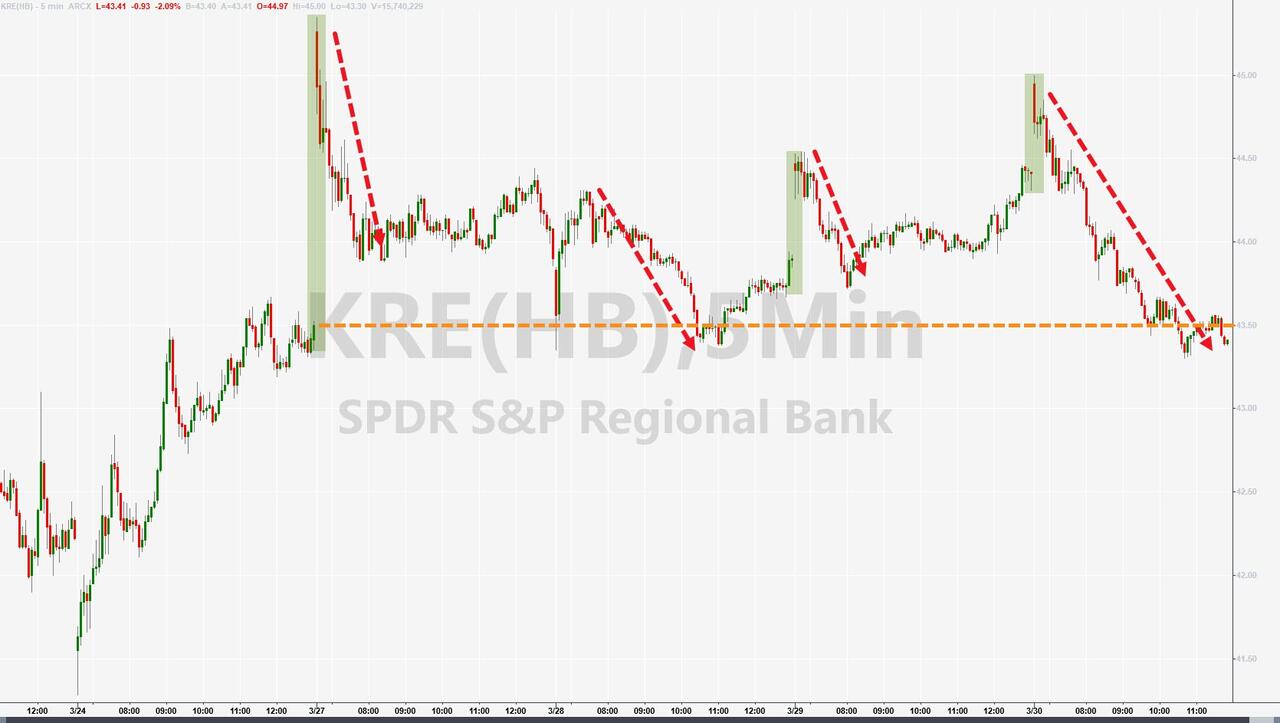
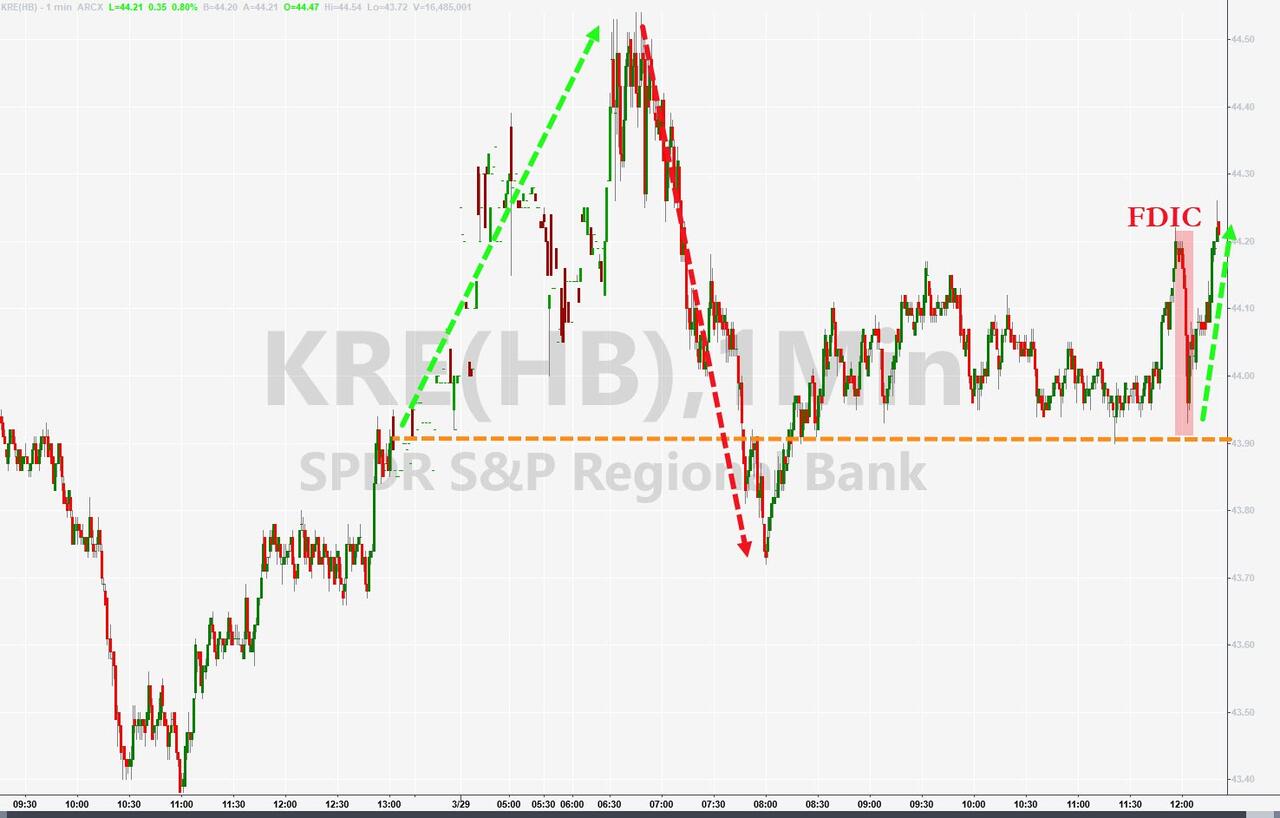
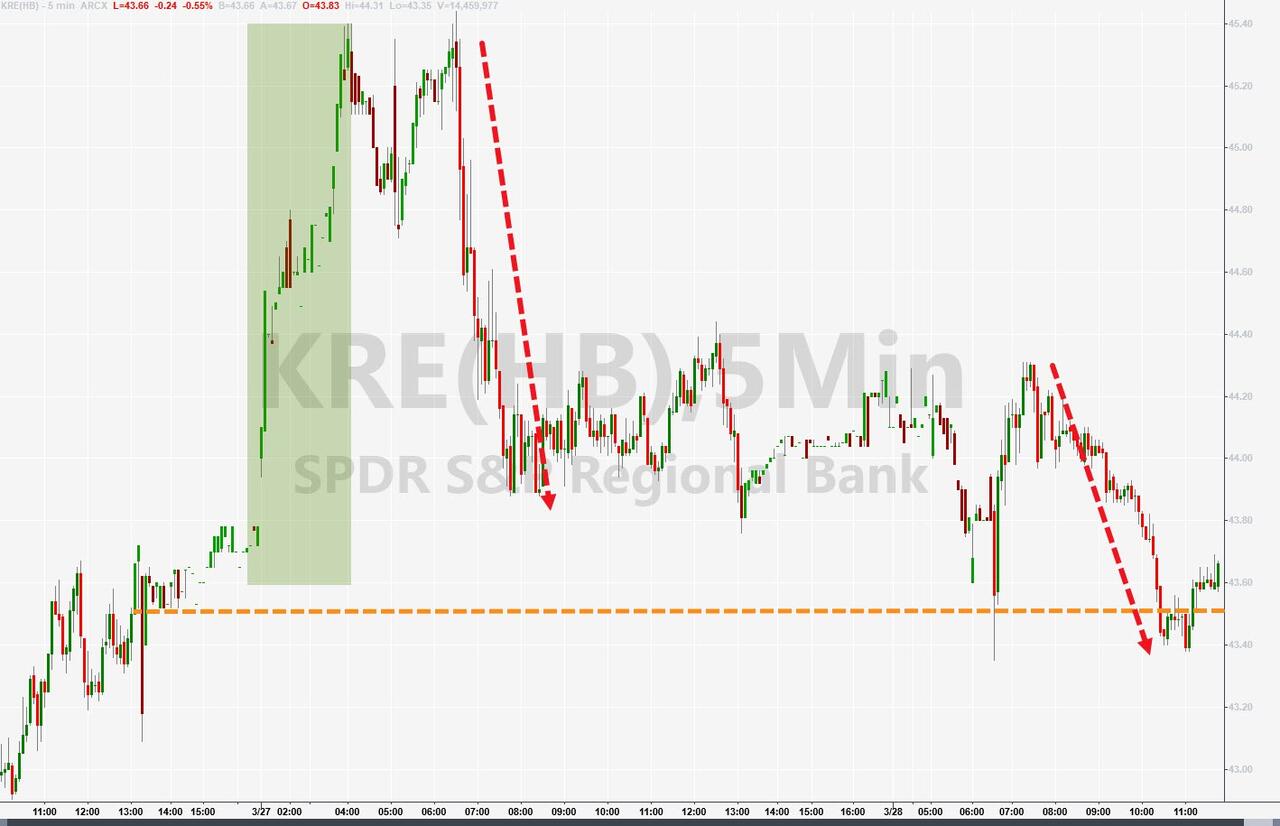
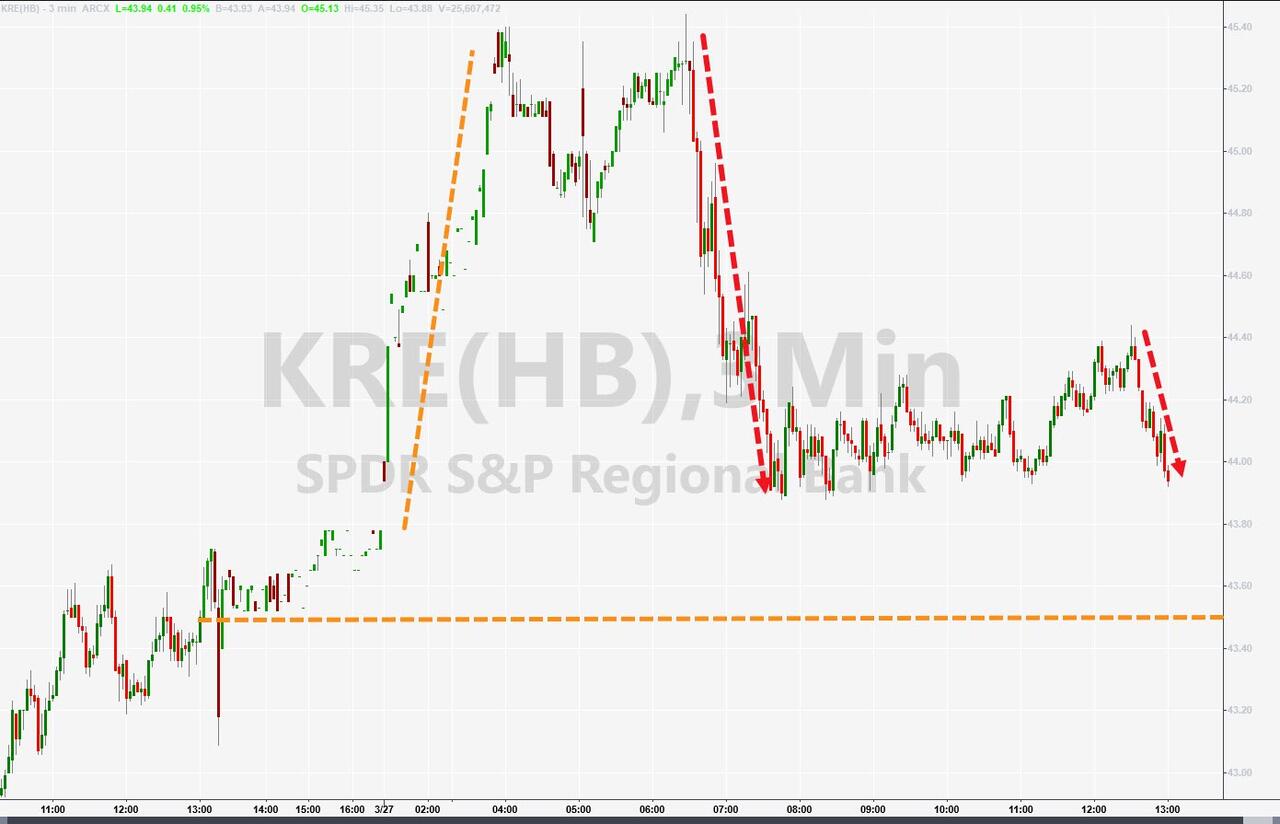
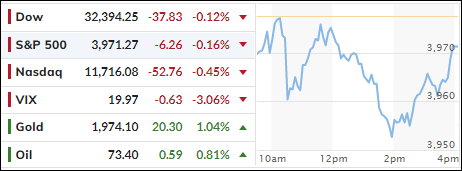
Despite this unbridled optimism about the banking crisis, the regional banking index KRE slipped after riding the roller coaster all day. Stocks followed suit with one Fed governor spewing hawkish words while another walked back the tough talk with some dovish tones, which pulled equities out of their midday slide.

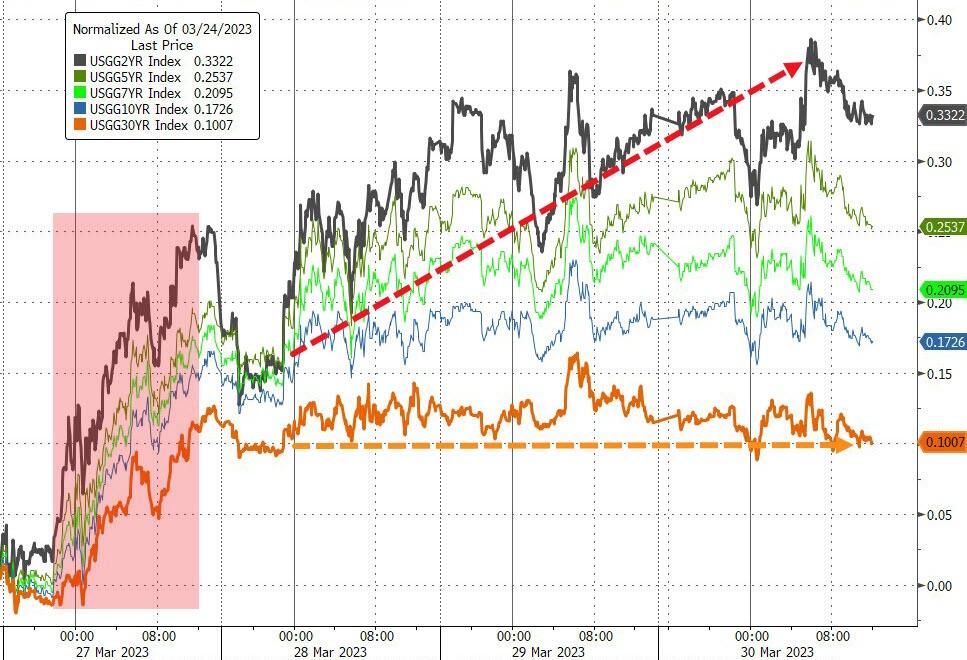
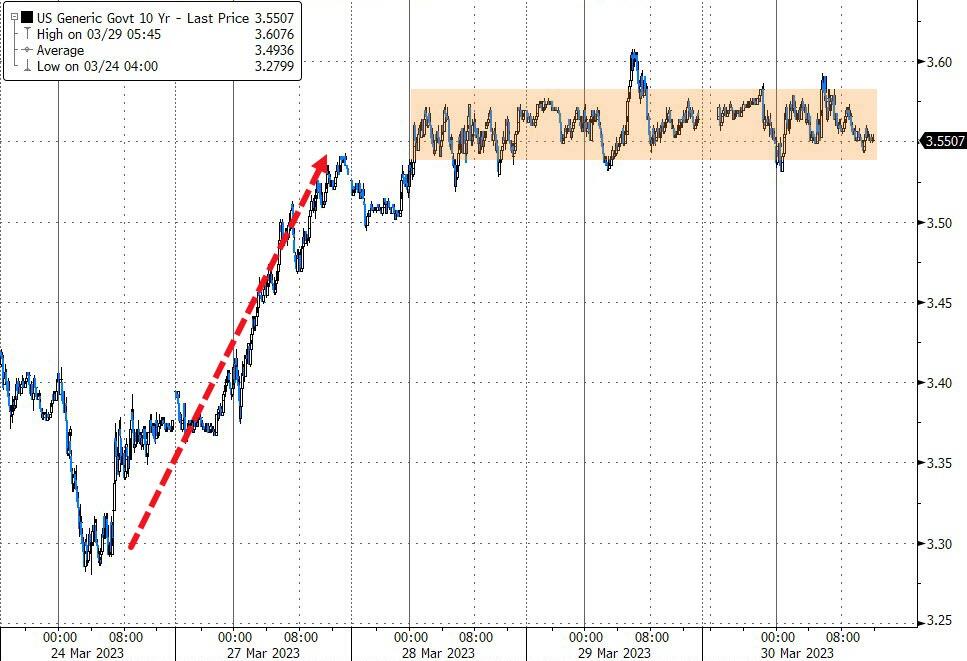
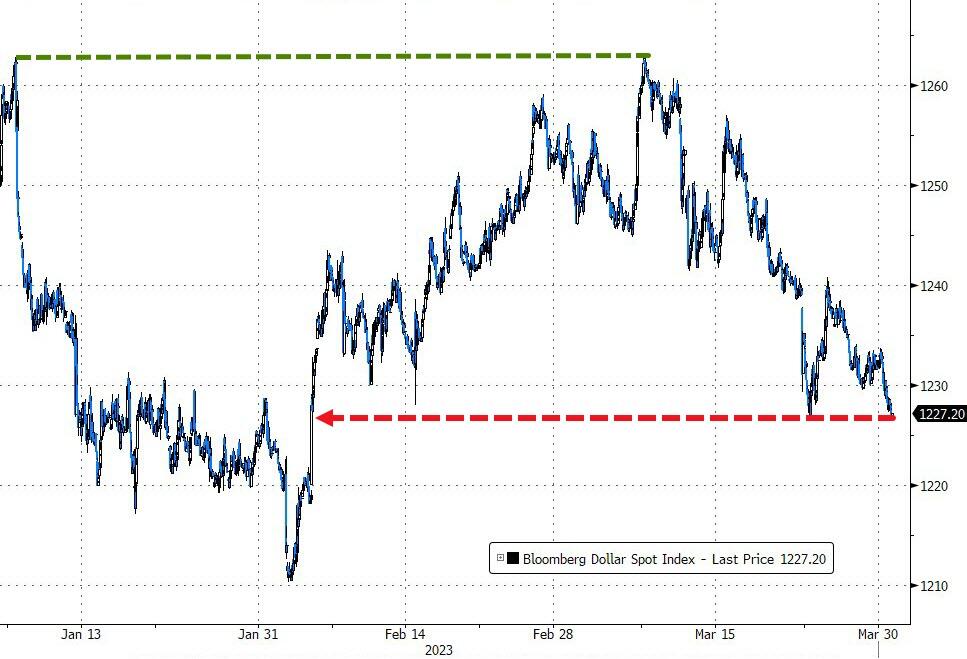
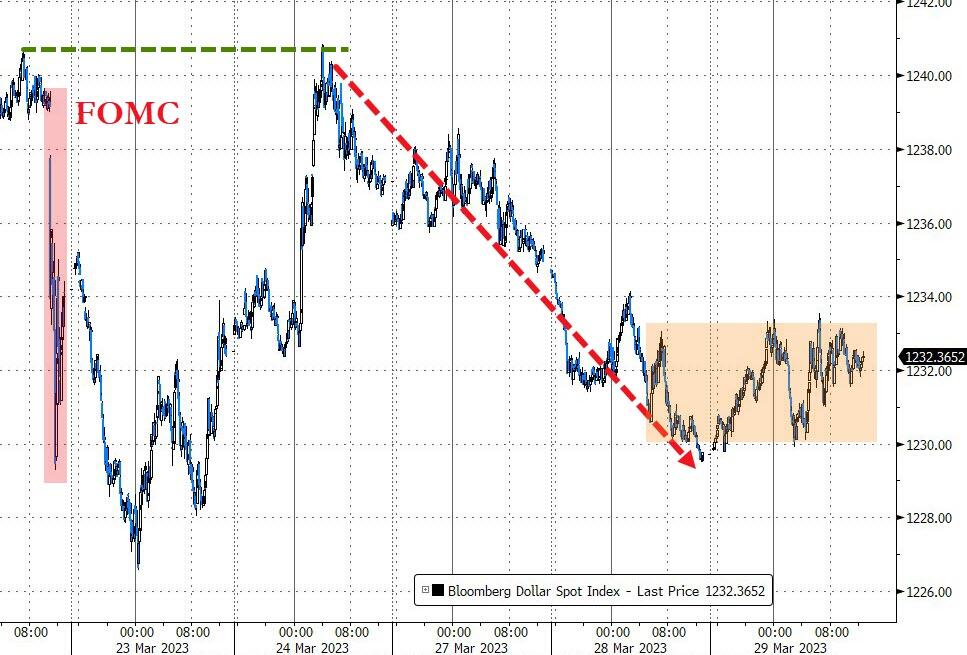
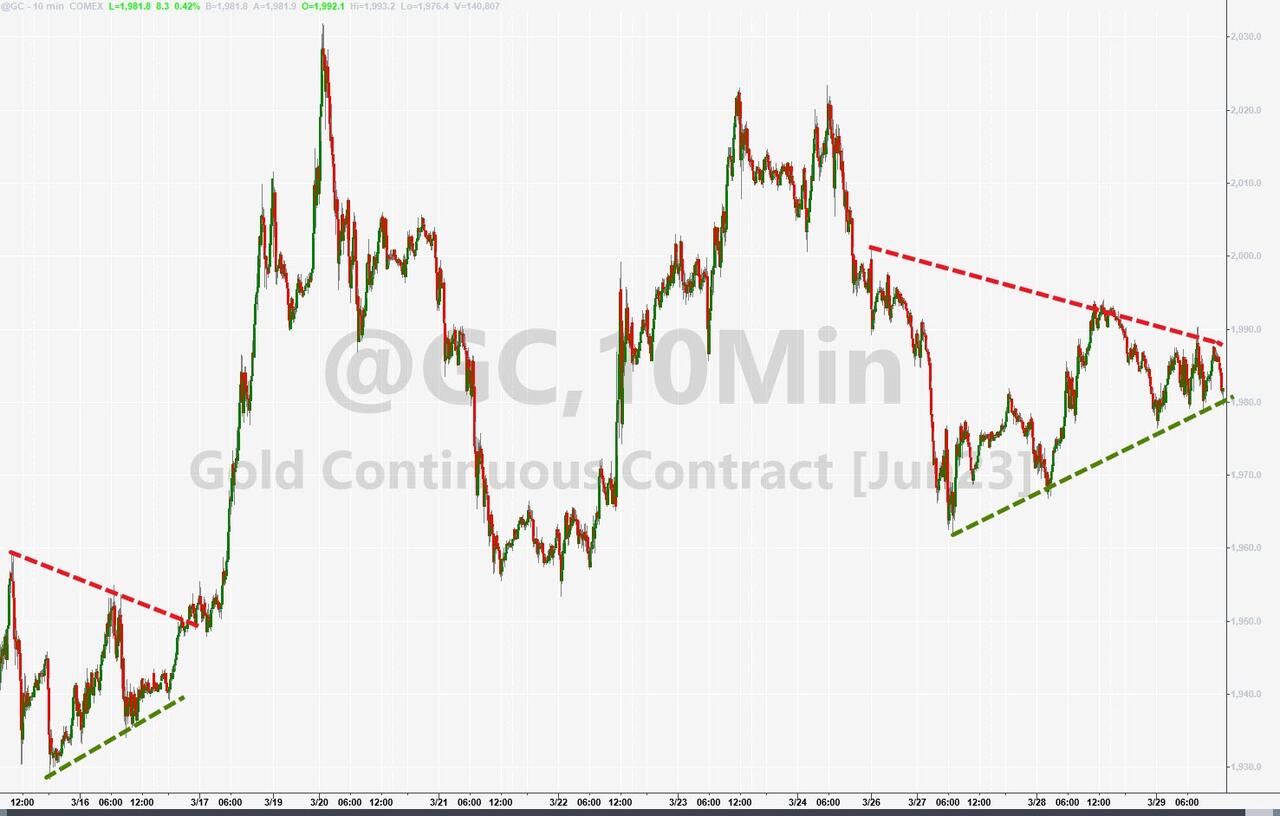
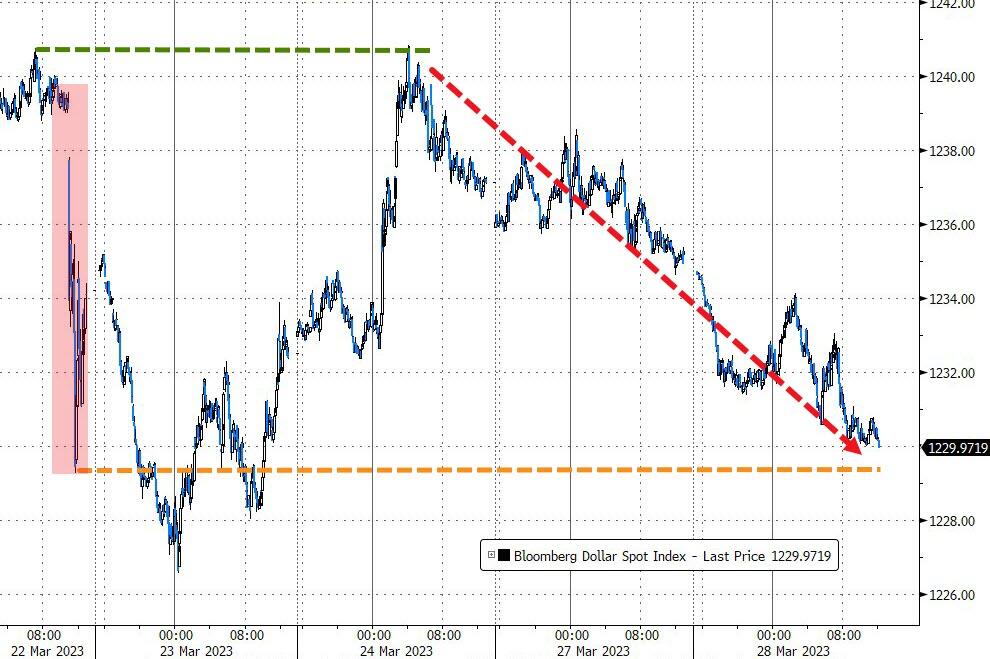
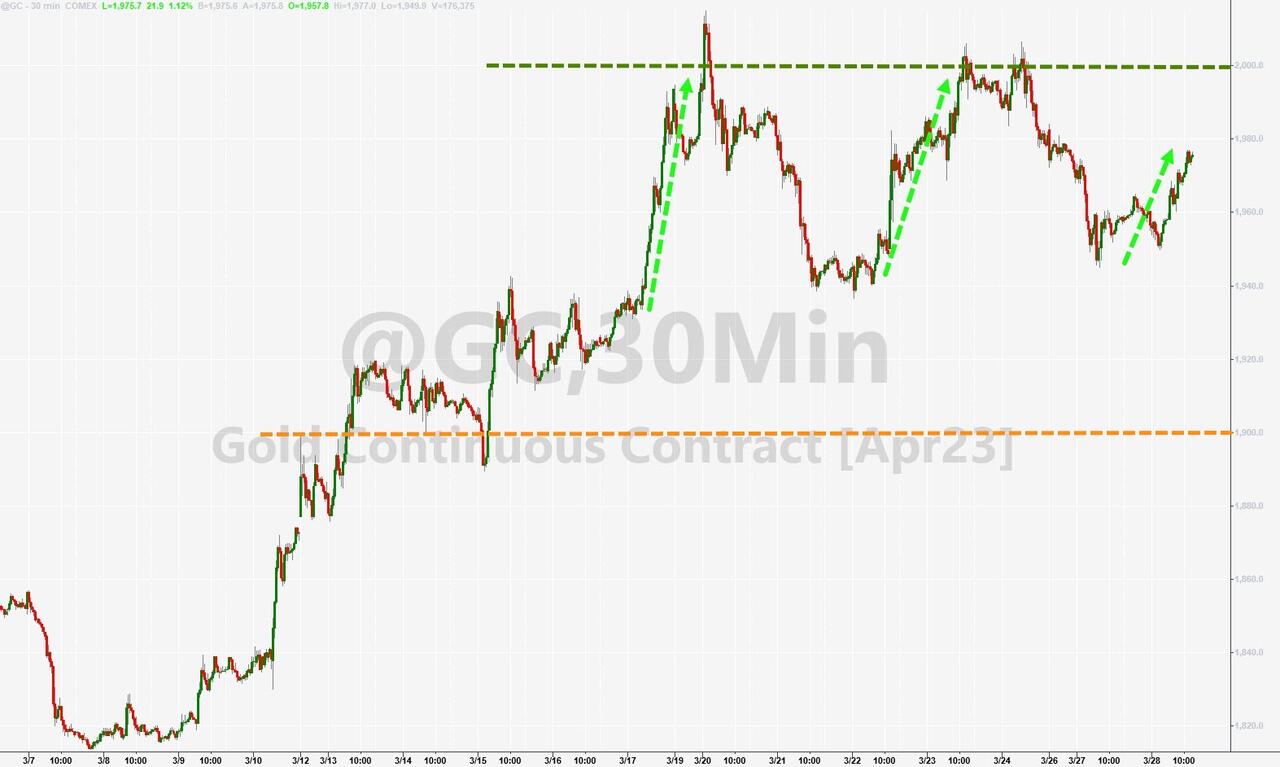
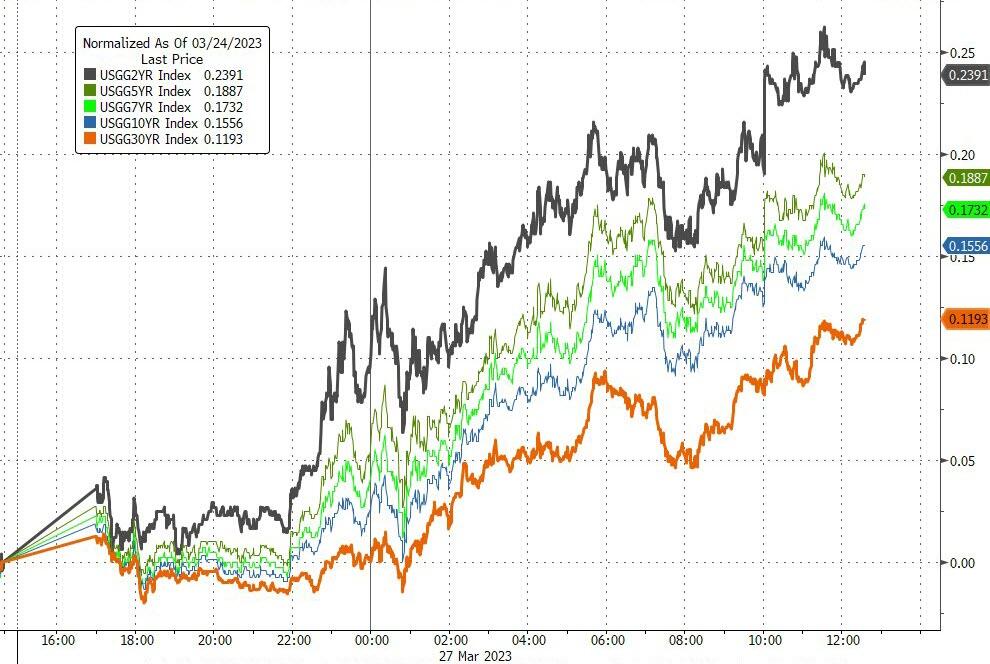
Bond yields slipped a tad, with the 10-year continuing its 3-day sideways pattern. The US Dollar fell to its lowest close since February 3rd, while Gold ripped higher by +1.63% and stopping just short of its $2k level.  

Read More
Is The Worst Of The Banking Crisis Over?

Ulli Market Commentary Contact

[Chart courtesy of MarketWatch.com]

  1. Moving the markets

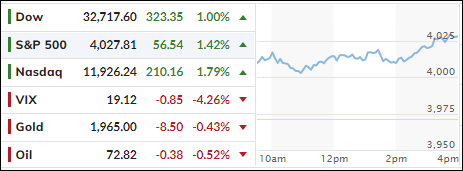
Judging by today’s rebound, it appears that traders and algos alike were no longer concerned with the state of the banking sector, nor if or when the Fed might shift into easing mode. None of it mattered, as sentiment maintained its bullish influence, with the S&P 500 reclaiming its 4,000 level—also helped by a calm bond market.

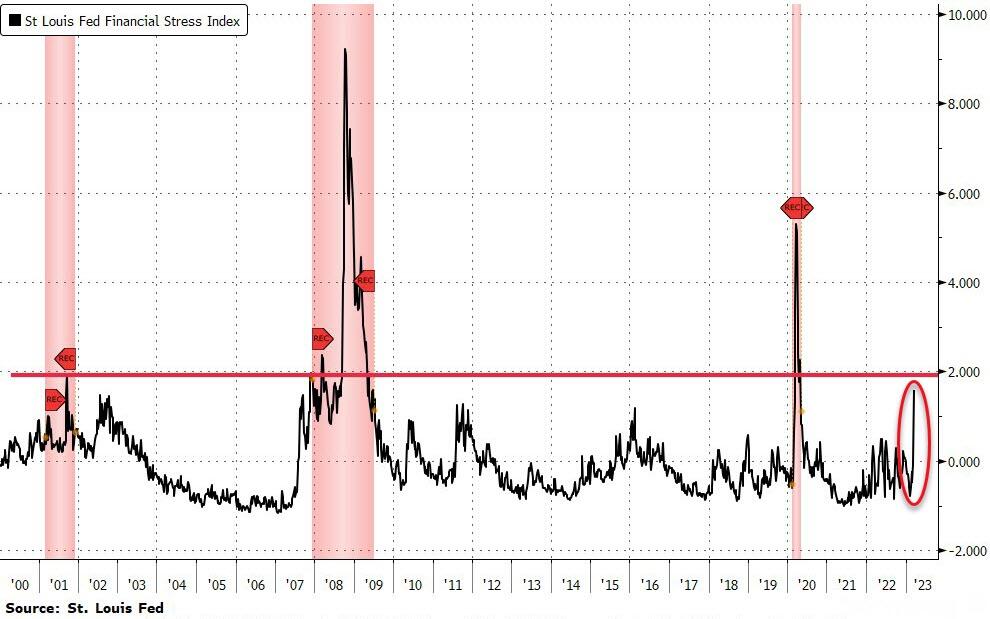
Never mind that the Fed’s gauge of financial stress has approached levels of concern, as ZH reported, but it seems that policymakers’ best hope will be that the current calm will prevail long enough to keep the economy from falling off a cliff.

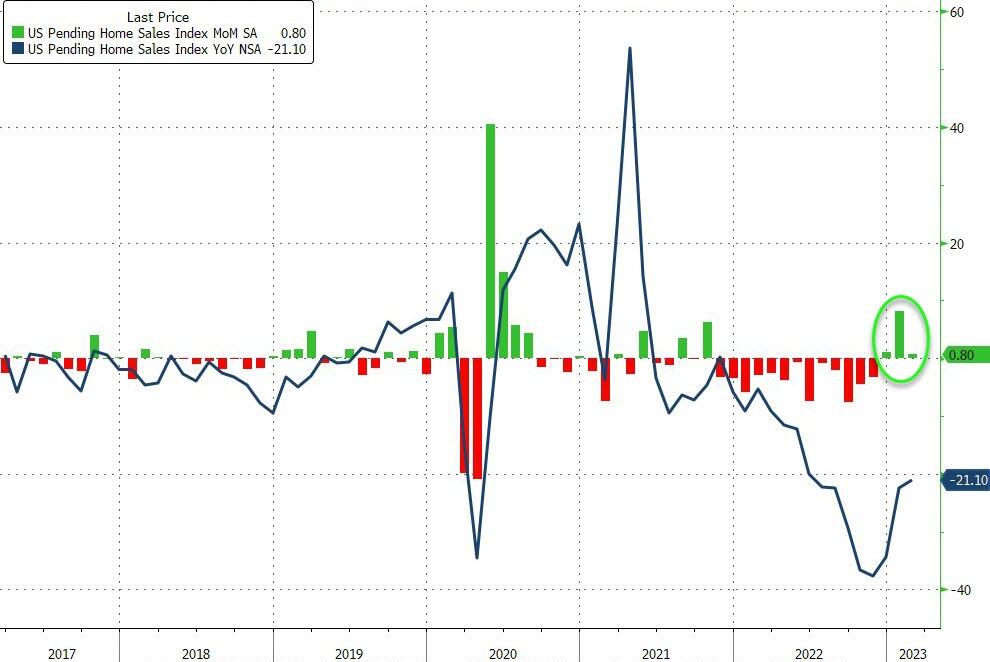
In economic news, we learned that the Pending Home sales rebound slowed in February after a huge 8.1% surge in January.  

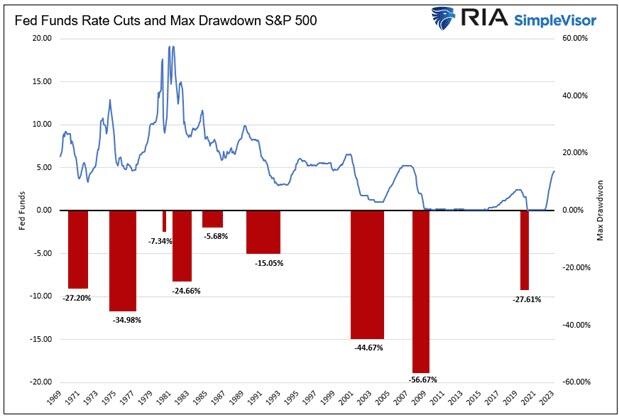
I enjoyed market analyst and charting guru Michael Lebowitz’ piece on clarifying that a Fed pivot (to lower rates) is not bullish, if history is any indicator. He states that since 1970, there have been nine instances in which the Fed significantly cut the Fed Funds rate. The average maximum drawdown from the start of each rate reduction period to the market trough was 27.25%, as his chart shows.

Makes me think of the old saying “be careful what you wish for,” something that traders should keep in mind rather than only focusing on the event, expecting that bullish times are here again.

The regional banking sector’s ETF KRE pumped, dumped, and pumped again, which is surely not a sign of certainty or directional clarity. A similar rollercoaster happened to the big banks with KBWB first tanking and then cranking.

The US Dollar limped sideways, while Gold slipped but stayed above its $1,950 level and within striking distance of again taking out its $2,000 resistance point.

With today’s ramp, our Domestic TTI climbed back above its long term trendline for the first time in 3 weeks. Please see section 3 below for details.

Read More

Fluctuating Below The Unchanged Line

Ulli Market Commentary Contact

[Chart courtesy of MarketWatch.com]

  1. Moving the markets

Just like yesterday, climbing bond yields kept a lid on bullish sentiment, as the major indexes bounced around their respective unchanged lines before sauntering into red territory, where they closed with minor losses. The S&P and Nasdaq erased yesterday’s gains and never saw “green” during this session.  

There was no apparent driver on deck to keep the bullish theme intact and—despite traders looking beyond the banking crisis yet recognizing that on one hand the economy still shows some resilient growth but on the other could easily be pushed into a recession—buyers remained conspicuously absent.   

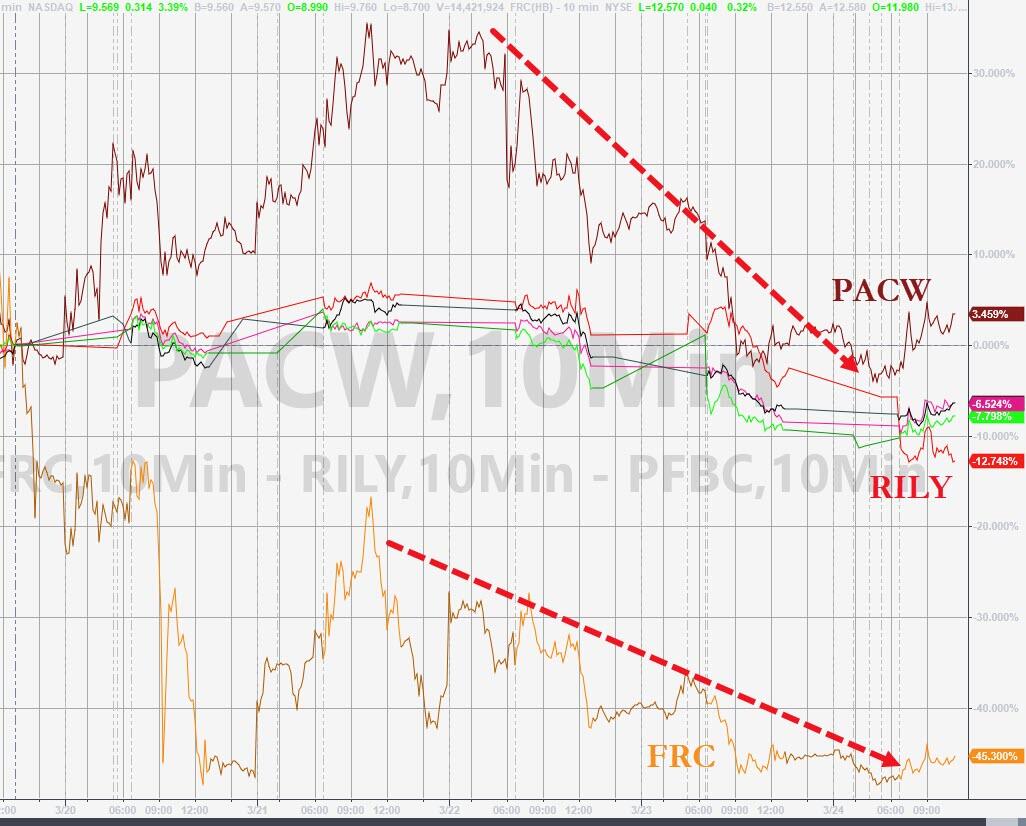
Regional banks took a dive, as hearings in Washington on bank failures offered nothing but more regulation, more laws, tighter credit, and no bailouts, as ZH reported. As a result, the regional banking index KRE dropped again, thereby wiping out yesterday’s rebound.

The US Dollar continued its 3-day down trend, which helped Gold to gain +1.06% on the day, as the precious metal found support at its $1,950 level.  

Read More
Grinding And Churning

Ulli Market Commentary Contact

[Chart courtesy of MarketWatch.com]

  1. Moving the markets

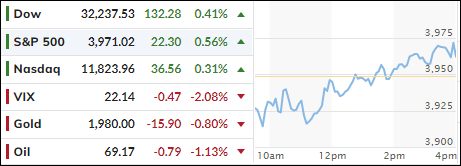
Apparently, traders found some encouragement from last week’s modest advances, as well as the fact that we made it through the weekend without another bank collapsing, so they pushed equities moderately higher, but the results were mixed, as the graph above shows.

Never mind that Deutsche Bank (DB) and other fellow European bank shares took a dive on Friday, this morning all was well, and European stocks set the tone for a positive US opening.

While this does not mean the banking crisis has been resolved, far from it, it simply has been put on the back burner for the time being. The dominant reason is that Wall Street is still convinced that the Fed is bluffing and a pause or pivot may be in the near future, as the economy points to stagflation.

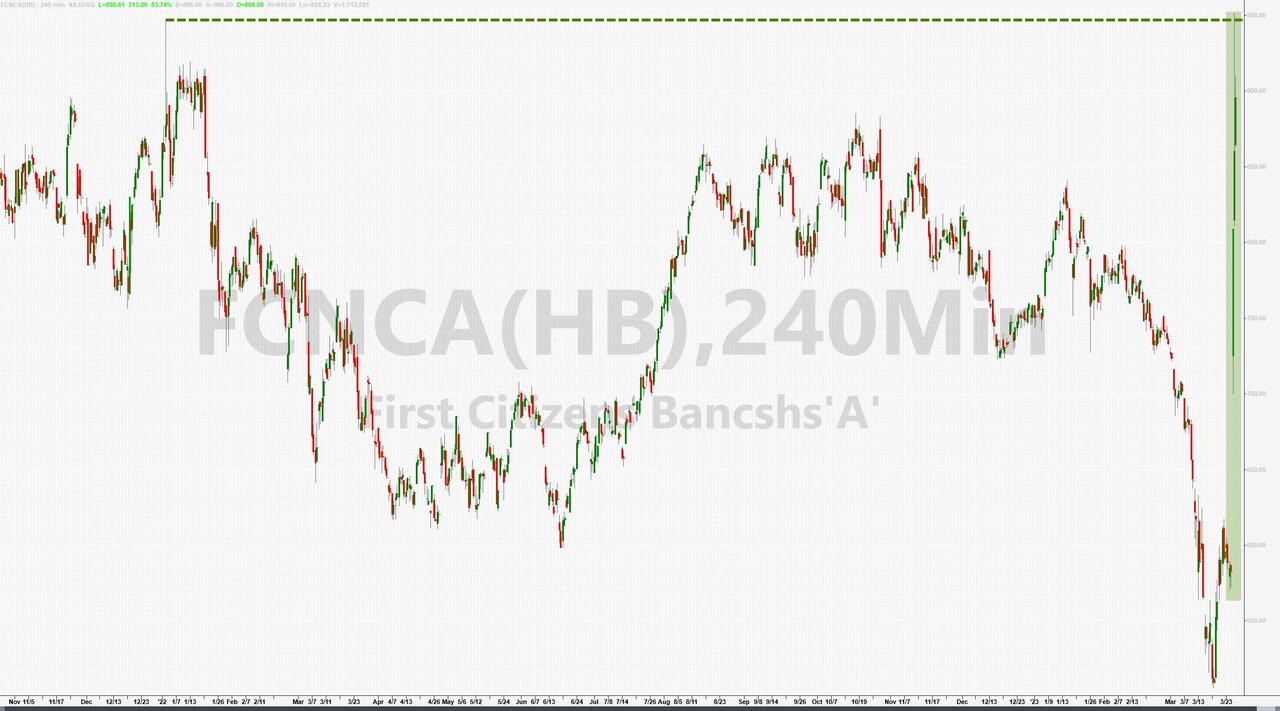
The reginal banking index ETF KRE managed to add 1.6%, while some of its components did much better, like First Citizens Bank, which soared over 50%. Helping this rebound was improved market sentiment based on irrational hope of policymakers getting a handle on these challenges. Yeah, right…

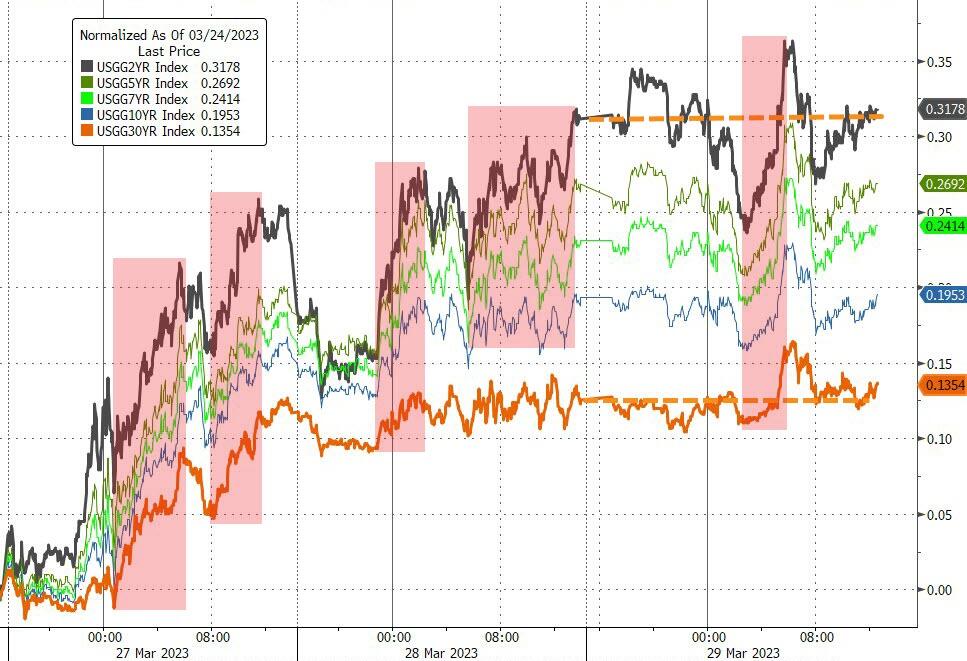
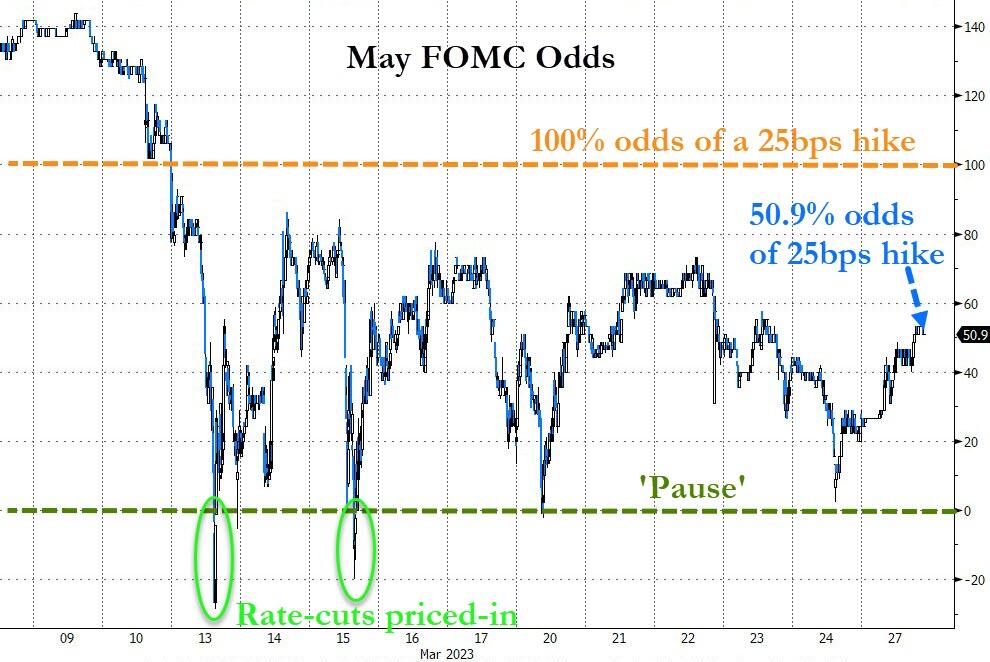
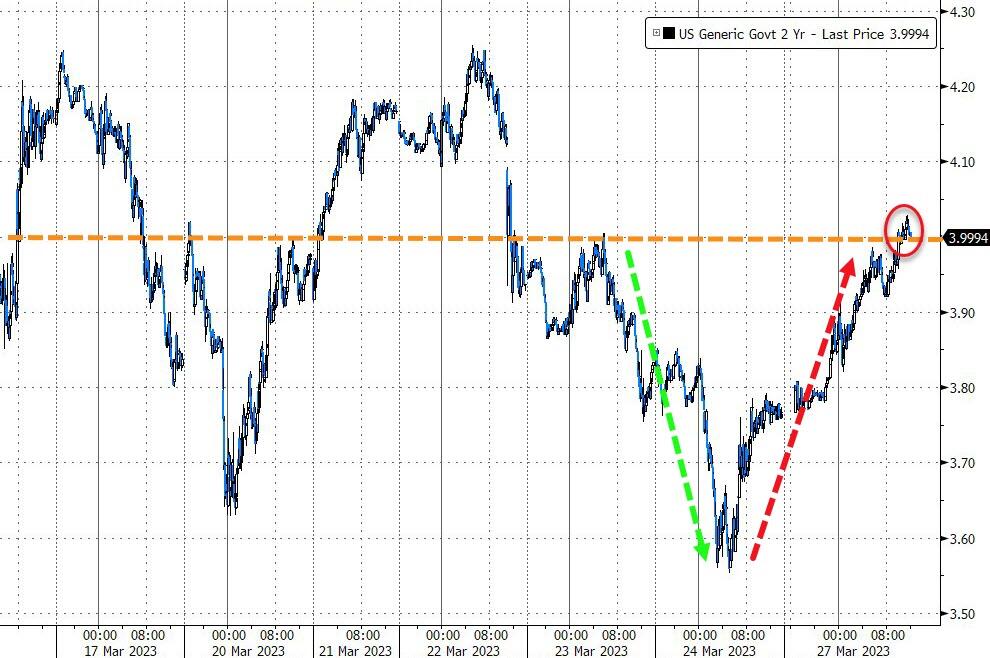
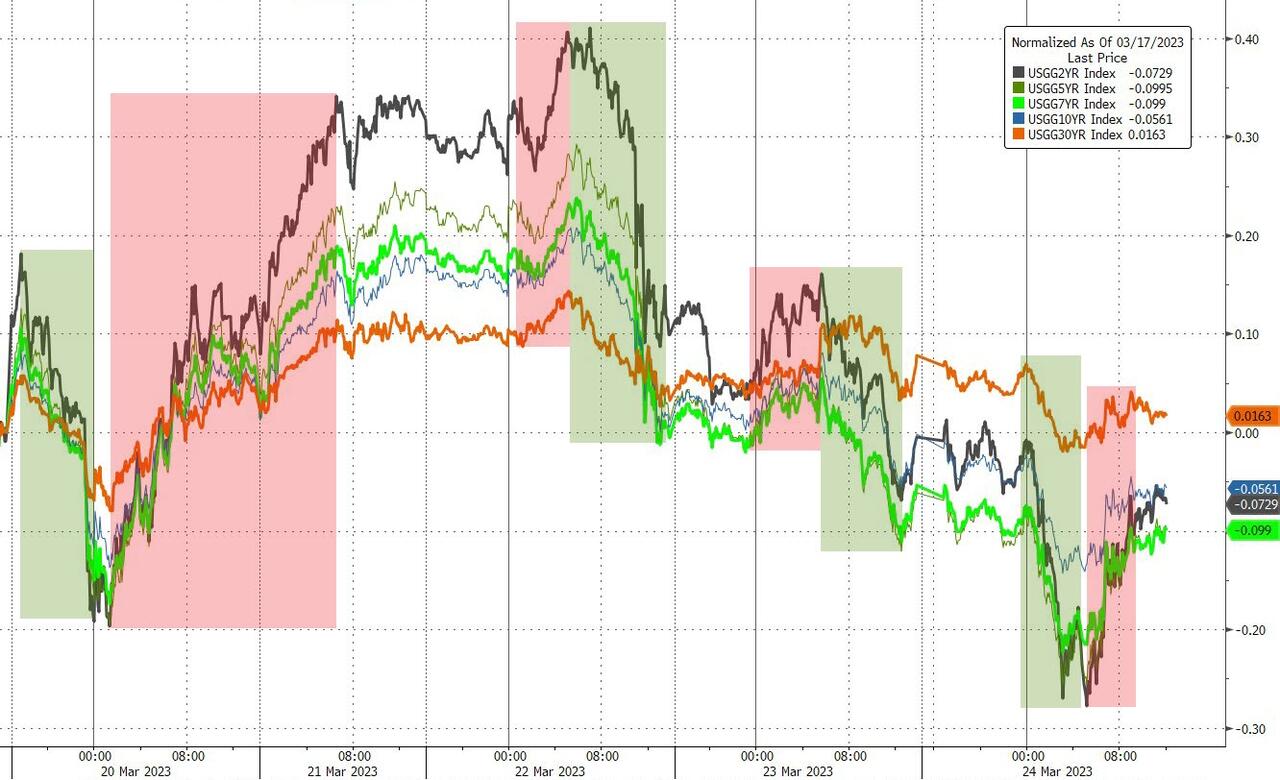
Traders conveniently overlooked the fact that bond yields surged, and rate hike expectations took on a hawkish tone, as ZH pointed out. The 2-year managed to recapture its 4% level, which it had surrendered 5 days ago.  

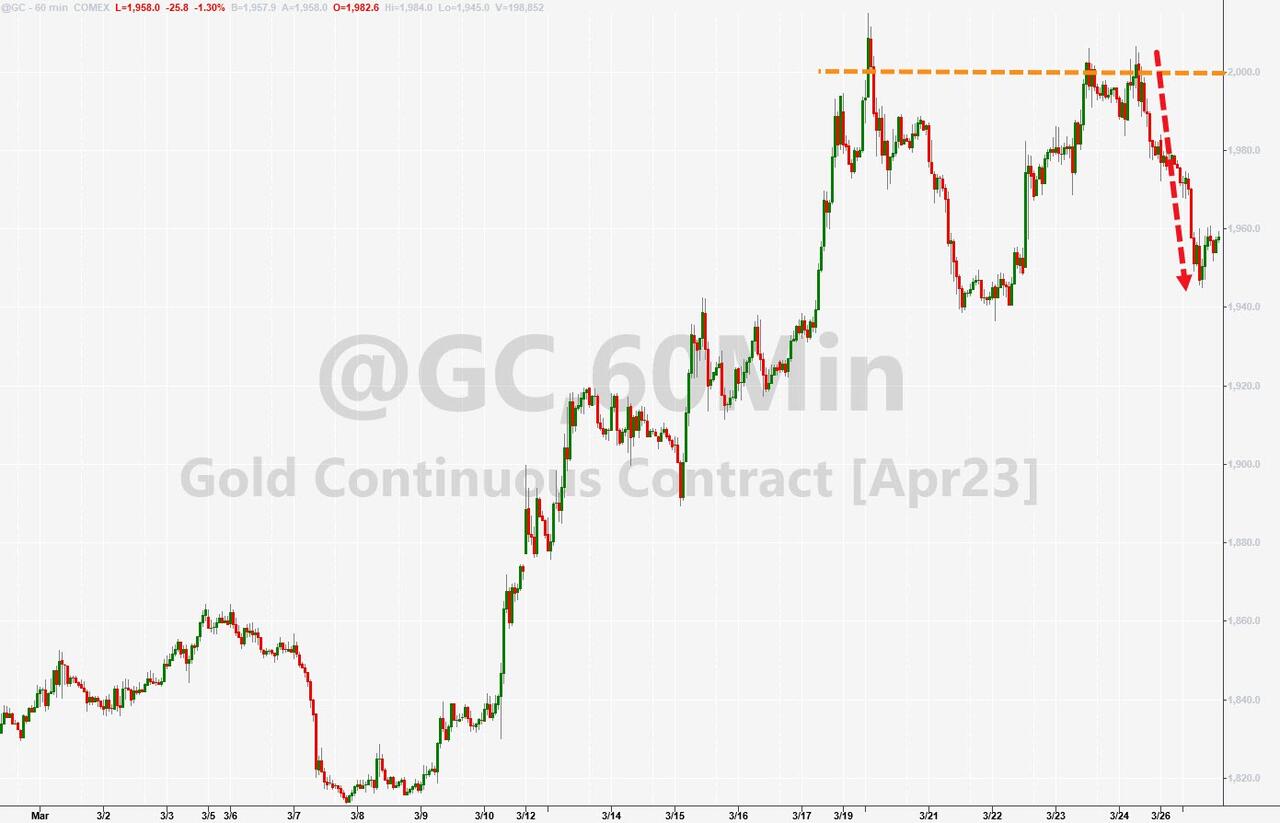
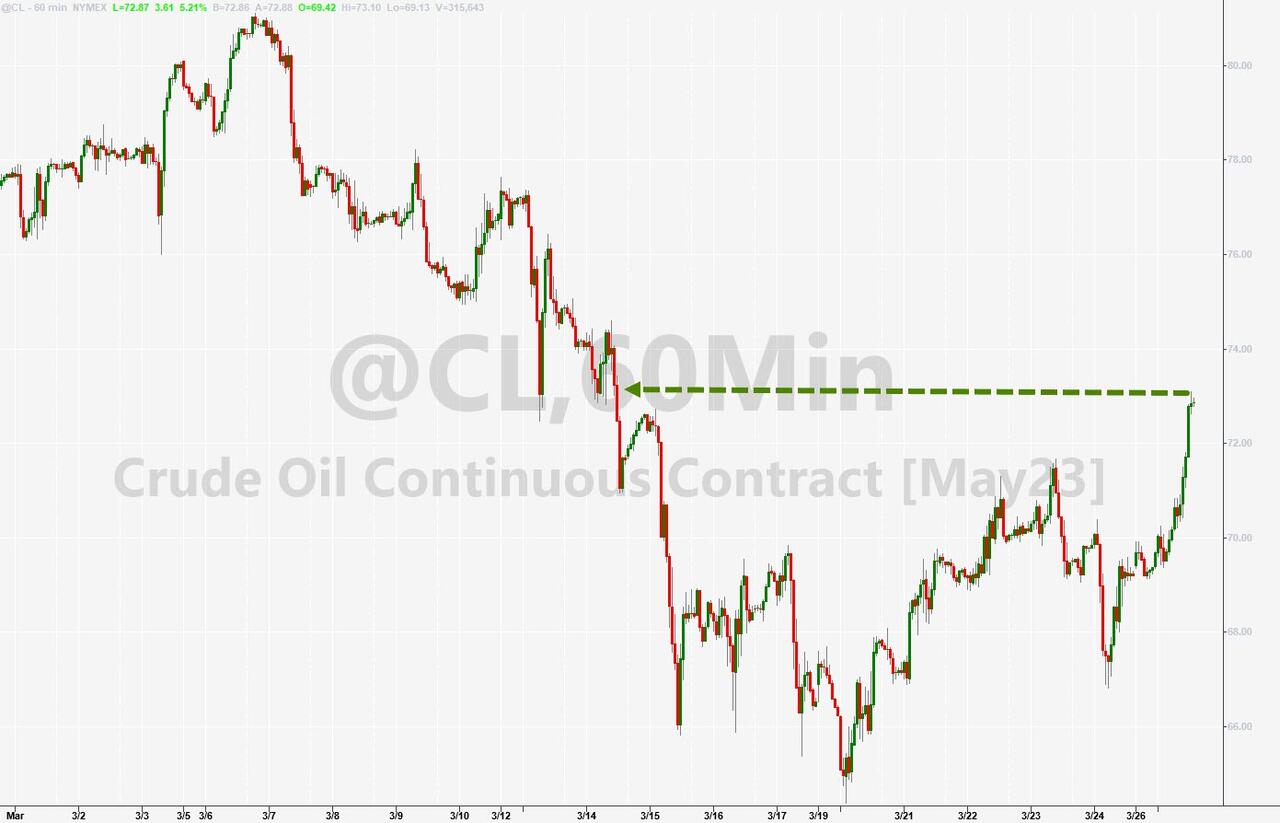
The US Dollar slid -0.26%, as did Gold, with its $2k level currently functioning as overhead resistance. Crude oil went on a rampage and added +5.40% for the session to close at $73.

Our Domestic Trend Tracking Index (TTI-section 3) has climbed again closer towards its long-term trend line. We are still in the neutral zone but will increase our equity holdings, should this dividing line between bullish and bearish territory be solidly broken to the upside.

Over the past two weeks, all attempts have been nothing but head fakes.  

Read More
ETFs On The Cutline – Updated Through 03/24/2023

Ulli ETFs on the Cutline Contact

Below, you can evaluate the latest High-Volume ETF Cutline report, which shows how far above or below their respective long-term trend lines (39-week SMA) my currently tracked ETFs are positioned.

This report covers the HV ETF Master List from Thursday’s StatSheet and includes 312 High Volume ETFs, defined as those with an average daily volume of more than $5 million, of which currently 143 (last report: 111) are hovering in bullish territory. The yellow line separates those ETFs that are positioned above their trend line (%M/A) from those that have dropped below it.
Take a look:                                                                   

The HV ETF Master Cutline Report

In case you are not familiar with some of the terminology used in the reports, please read the Glossary of Terms. If you missed the original post about the Cutline approach, you can read it here.      

ETF Tracker Newsletter For March 24, 2023

Ulli ETF Tracker Contact

ETF Tracker StatSheet          

You can view the latest version here.

SHAKING OFF BANKING FEARS

[Chart courtesy of MarketWatch.com]

  1. Moving the markets

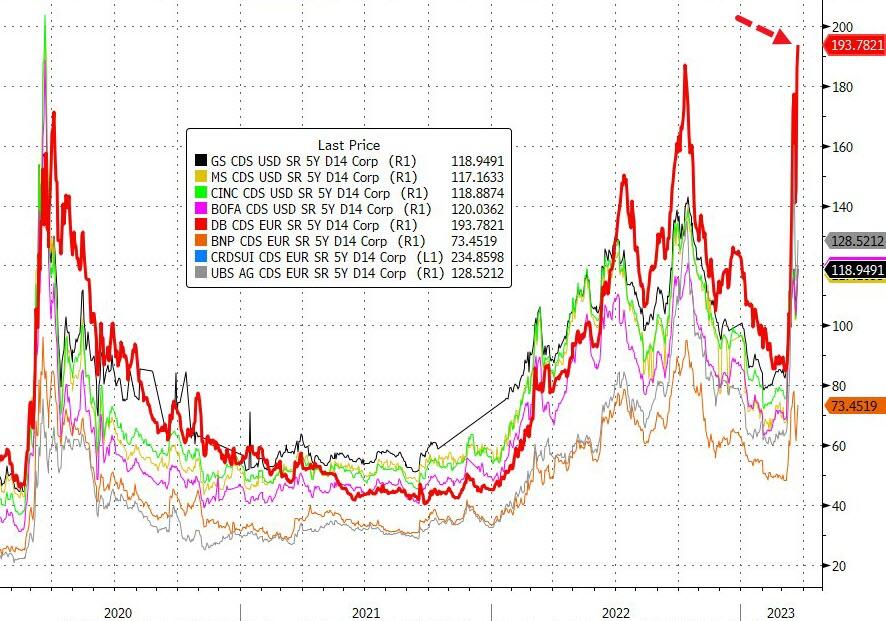
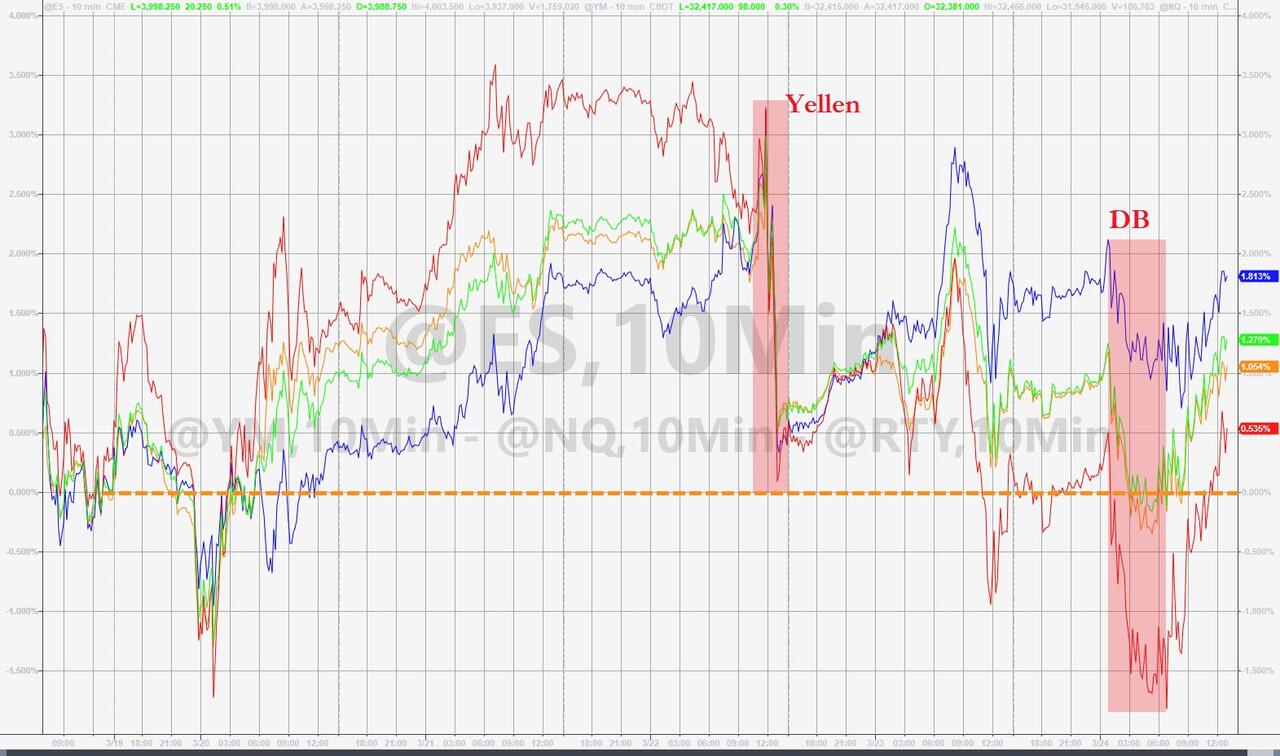
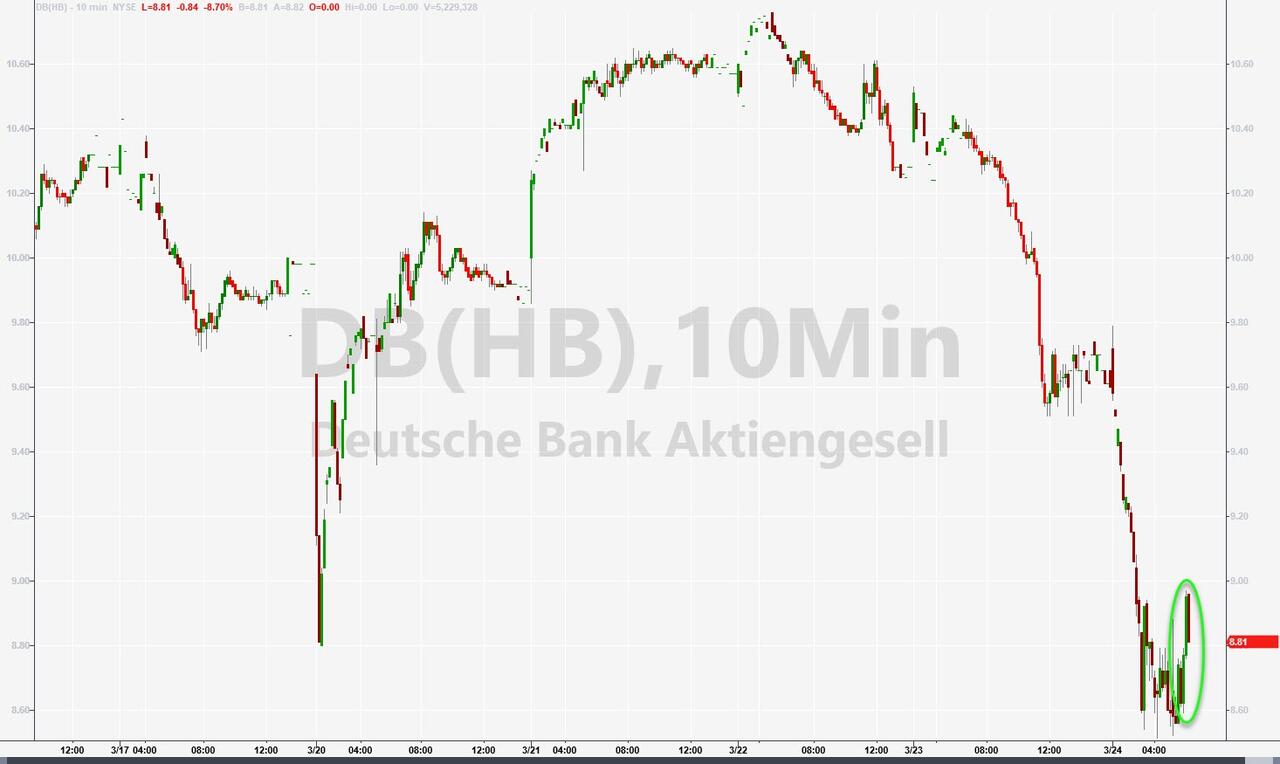
Finally, the much awaited and my opinion top banking cockroach, namely Deutsche Bank (DB), made an appearance with its shares sliding due to the German lenders’ Credit Risk jumping, but without an apparent spark.

With the Credit Suisse debacle fresh on everyone’s mind, traders were “sensitive” to more questionable banking news, so the major indexes took an early bath. As the session wore on, however, DB managed to crawl out of that early 7% hole, which helped the US market reduce their early losses.

European notable voices tried to calm down the situation, as ZeroHedge pointed out:

  • GERMANY’S SCHOLZ: EUROPEAN BANKING OVERSIGHT IS ROBUST AND STABLE, DEUTSCHE BANK IS `VERY PROFITABLE’, NO REASON FOR WORRY
  • ECB’S LAGARDE TELLS EU LEADERS EURO AREA BANKING SECTOR STRONG, ECB FULLY EQUIPPED TO PROVIDE LIQUIDITY TO EURO AREA FINANCIAL SYSTEM, IF NEEDED
  • MACRON: EUROPEAN BANKS HAVE SOLID FUNDAMENTALS

While the day was saved, I think DB will be again the center of attention possibly as early as next week, despite the “impressive” jawboning of the above European leaders.

The regional banks stock index KRE rode the rollercoaster but managed to close around its unchanged line, but some individual banks did not fare so well.

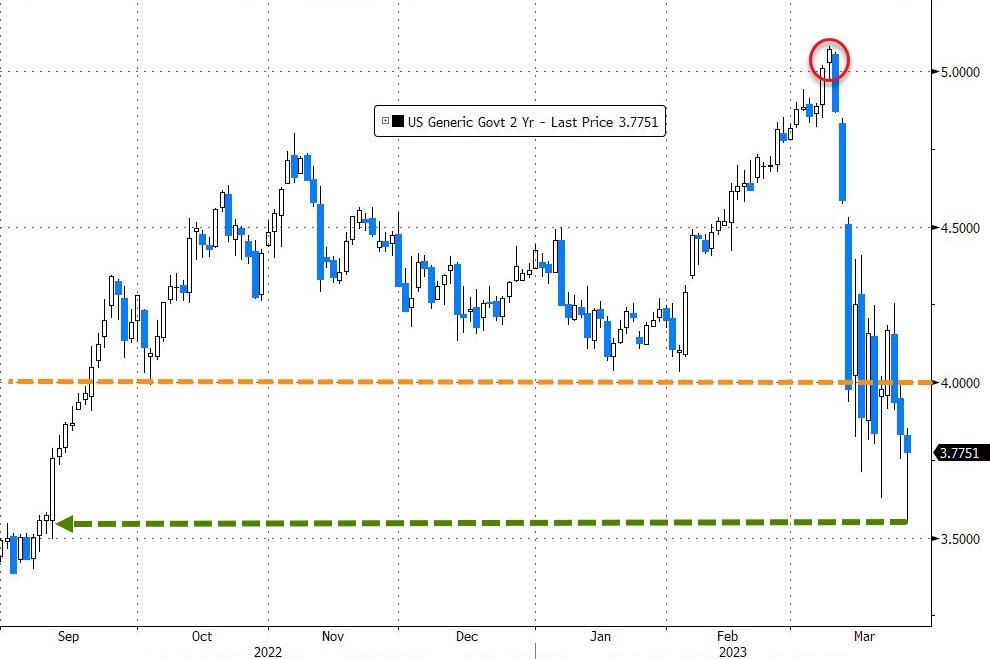
Bond yields were mixed for the week, but the 2-year tumbled way below its 4% level and to its lowest since September 2022.

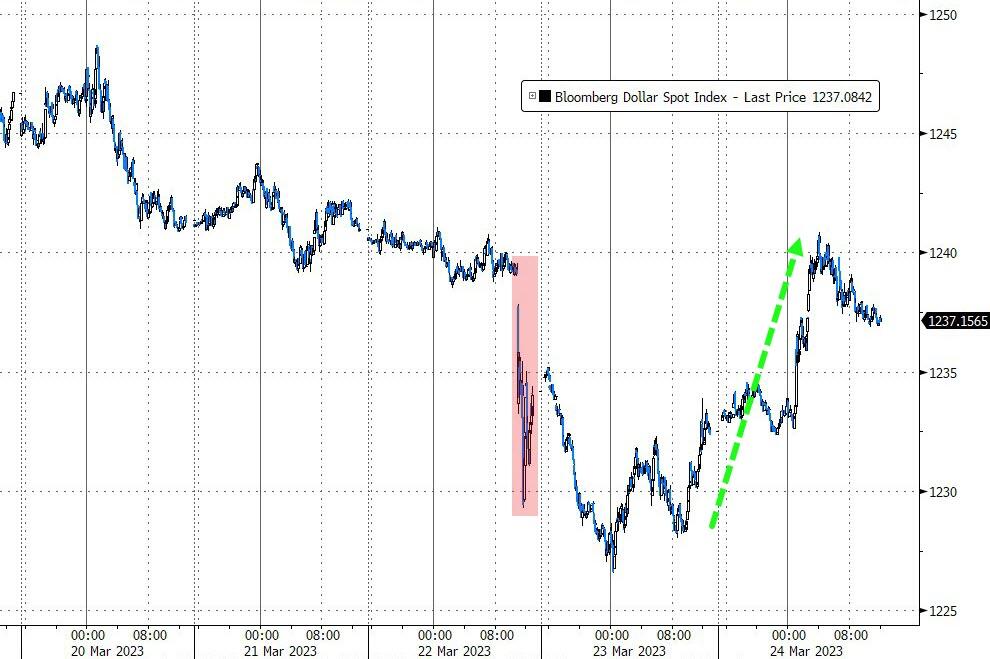
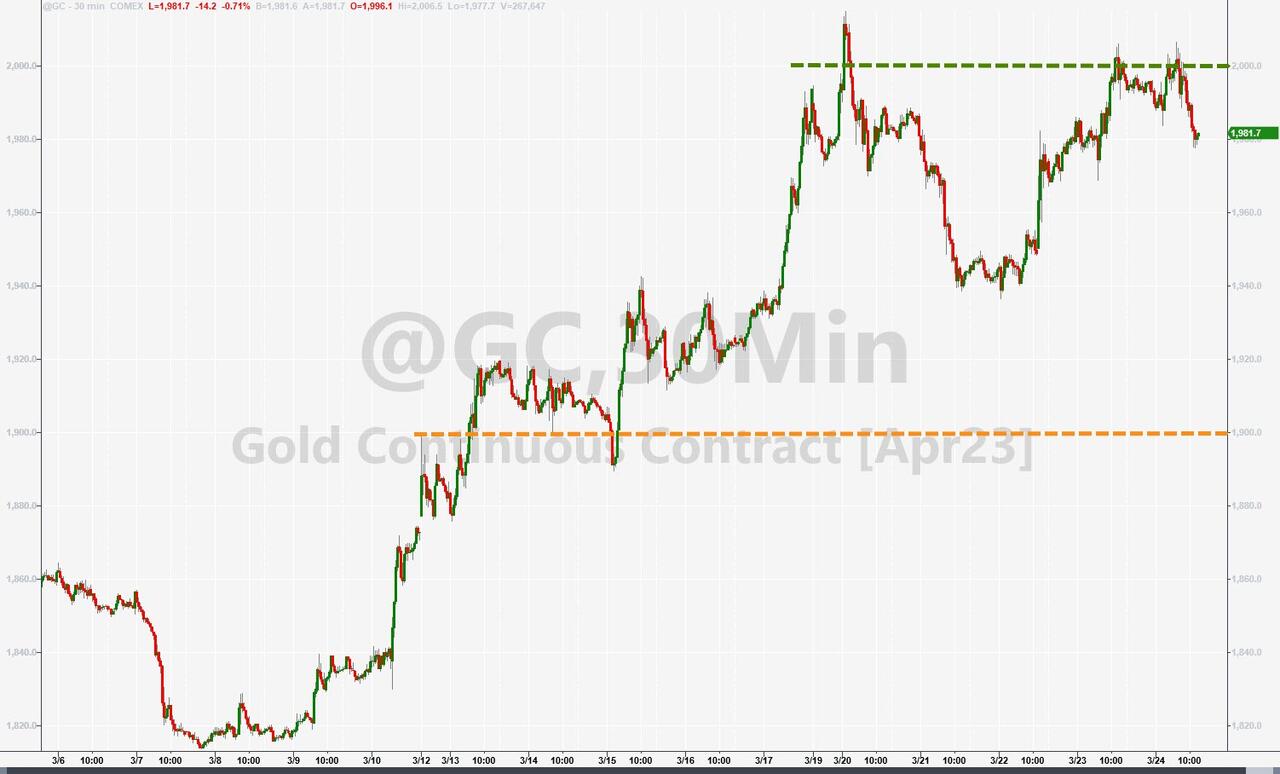
The US Dollar, despite ending the week lower, showed signs of life today by rallying 0.55%. That pulled Gold off its high, but it’s notable that the precious metal, during this past week, peeked its head twice above the $2,000 mark.  

The Fed is clearly caught between a rock and a hard place. Being serious about fighting inflation requires sharply higher interest rates. However, helping a sliding economy and a collapsing banking system has traders and algos convinced that the Fed is forced to pause or pivot.

If they do, inflation will soar, but stocks will initially join in and rally. If they don’t pause, the financial system is likely to crumble.

Which will it be?

Read More