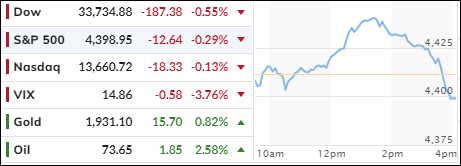
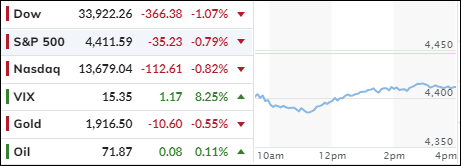
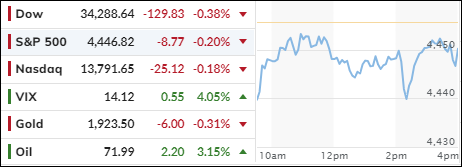
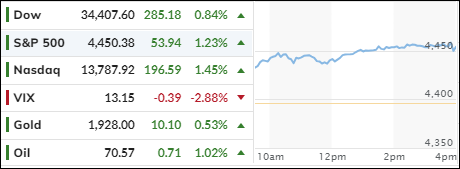
Just like yesterday, climbing bond yields kept a lid on bullish sentiment, as the major indexes bounced around their respective unchanged lines before sauntering into red territory, where they closed with minor losses. The S&P and Nasdaq erased yesterday’s gains and never saw “green” during this session.
There was no apparent driver on deck to keep the bullish theme intact and—despite traders looking beyond the banking crisis yet recognizing that on one hand the economy still shows some resilient growth but on the other could easily be pushed into a recession—buyers remained conspicuously absent.
Regional banks took a dive, as hearings in Washington on bank failures offered nothing but more regulation, more laws, tighter credit, and no bailouts, as ZH reported. As a result, the regional banking index KRE dropped again, thereby wiping out yesterday’s rebound.
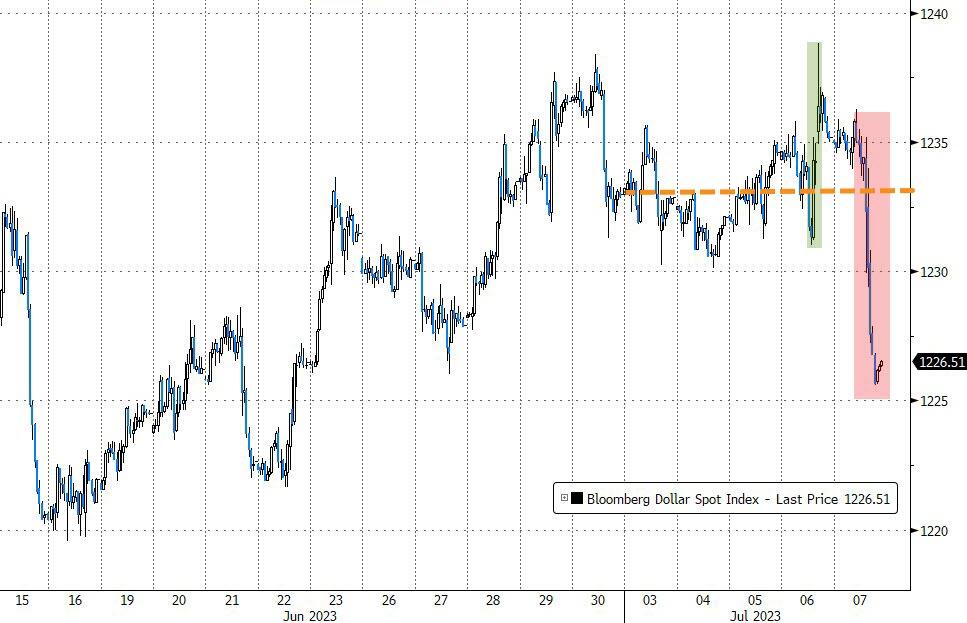
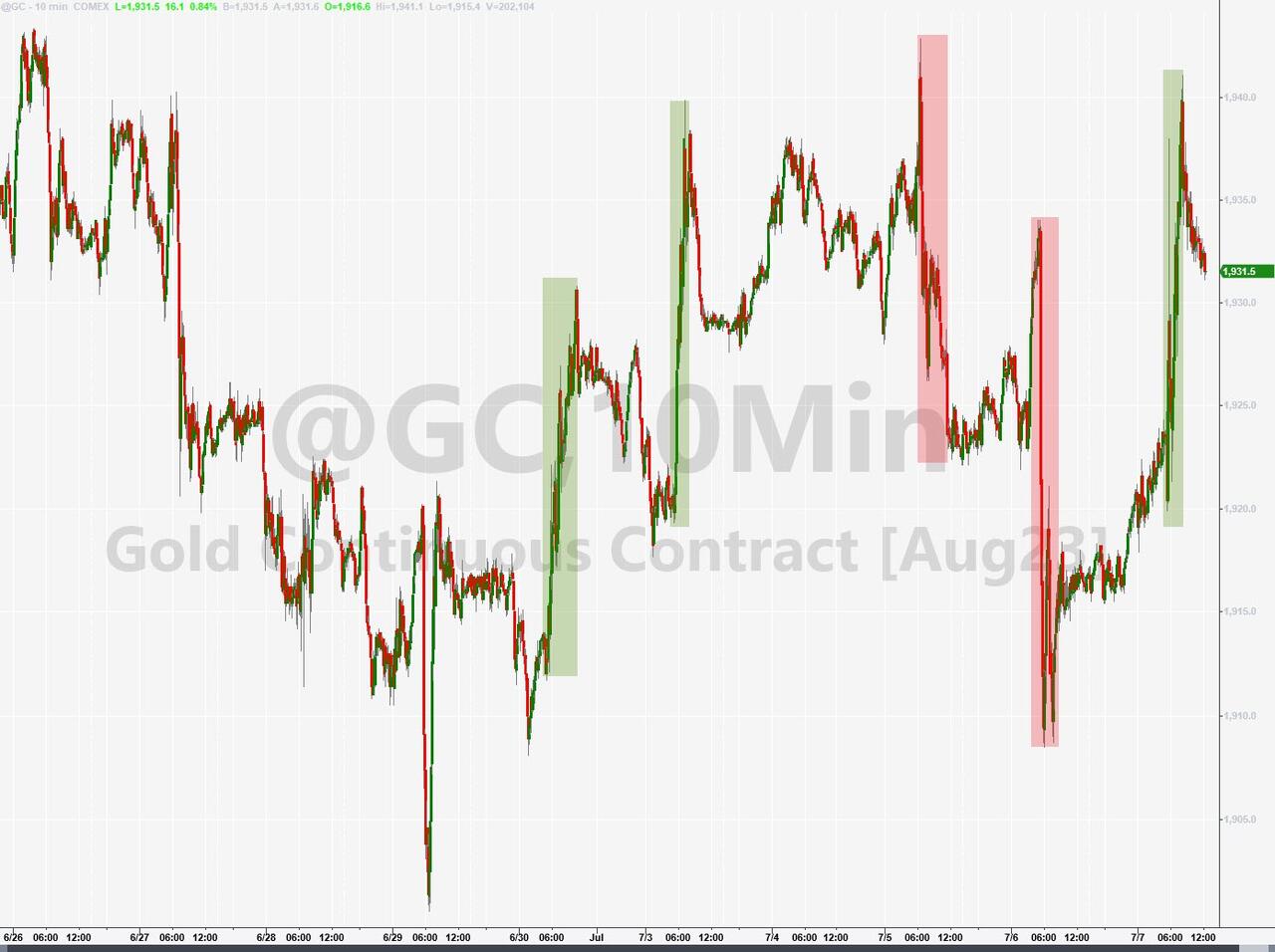
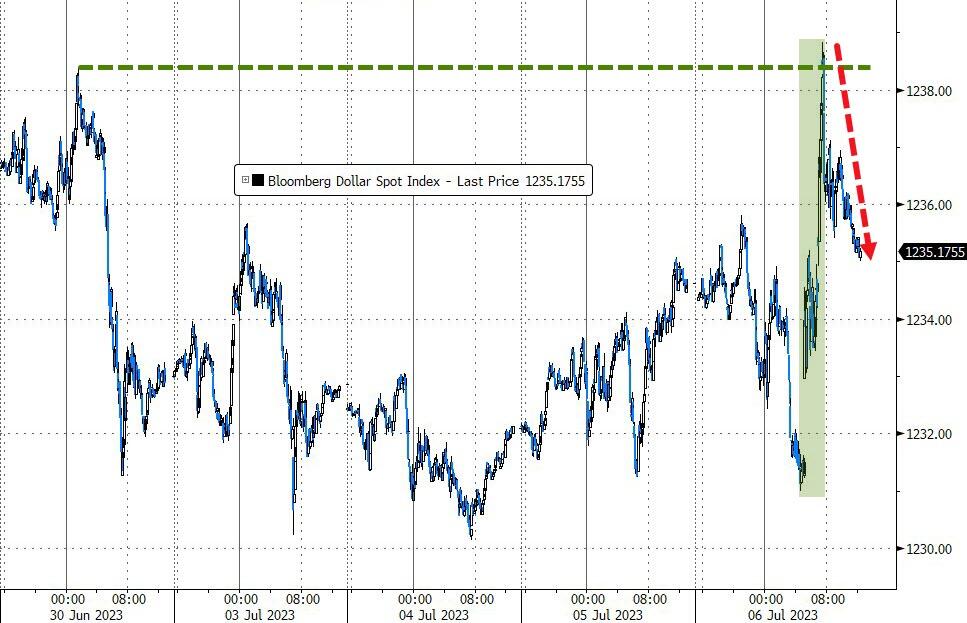
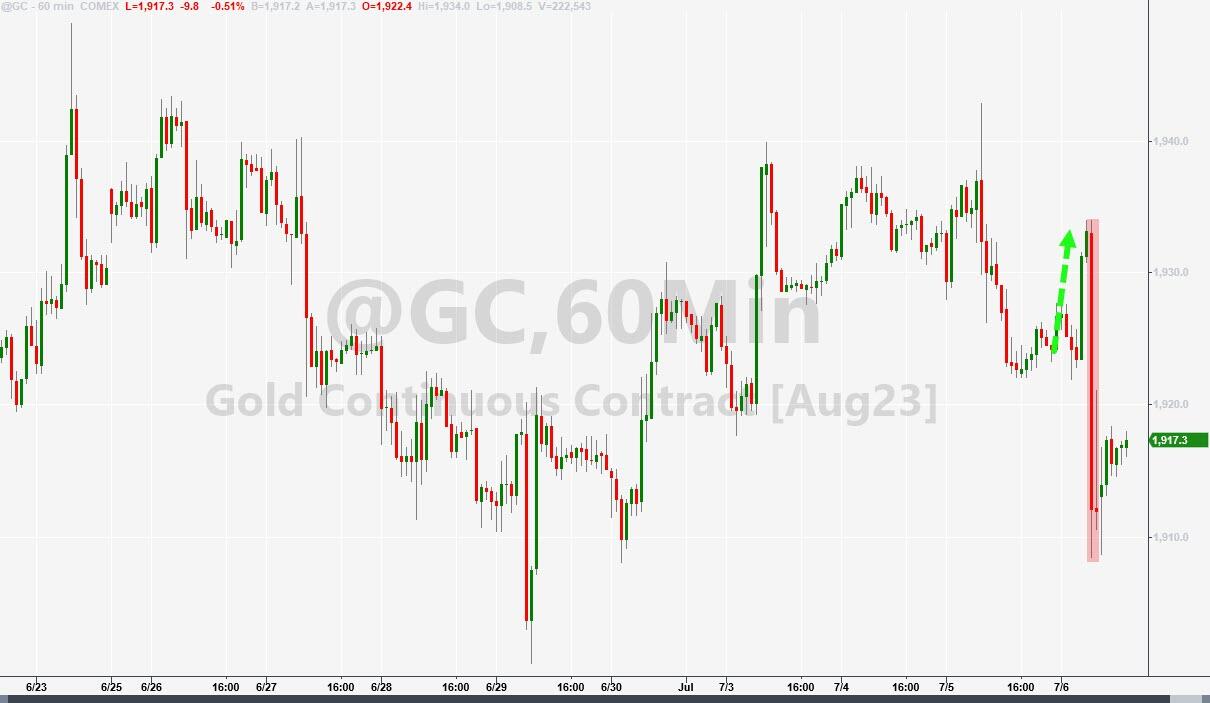
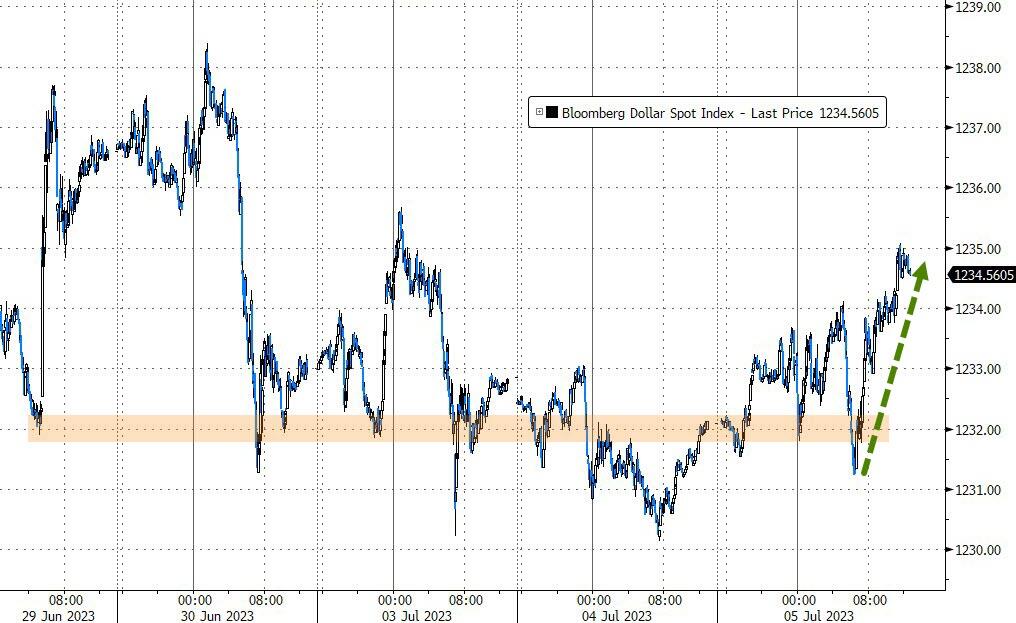
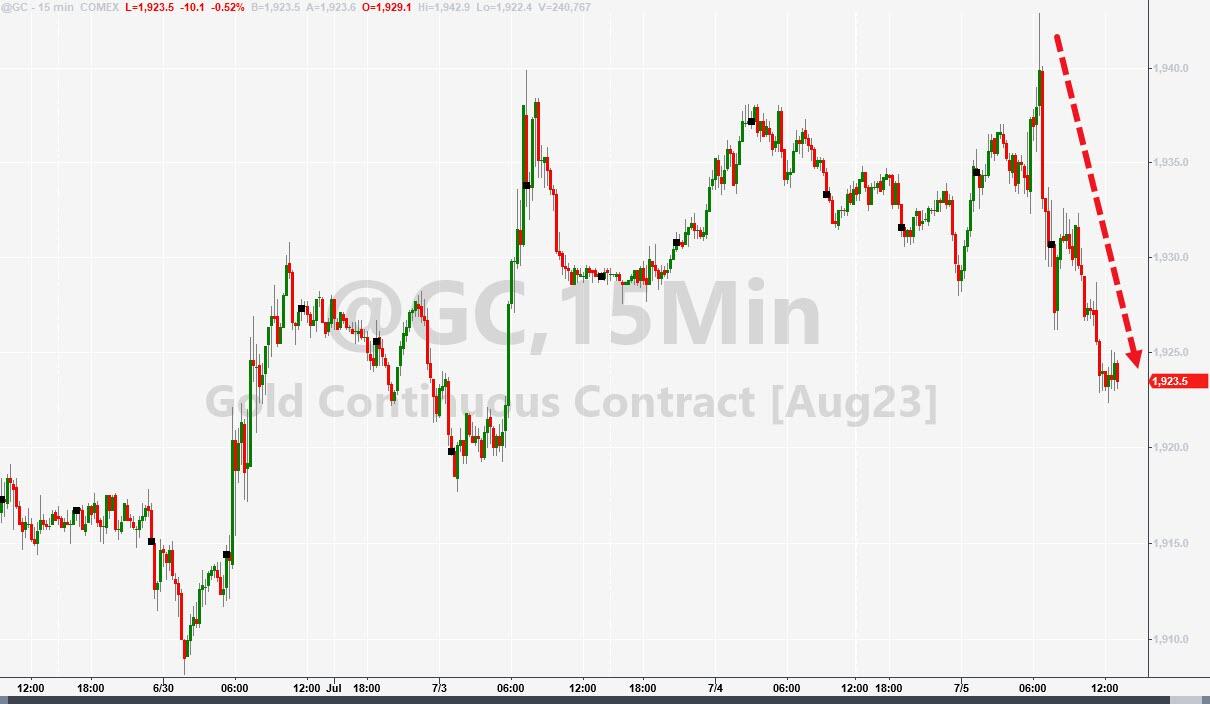
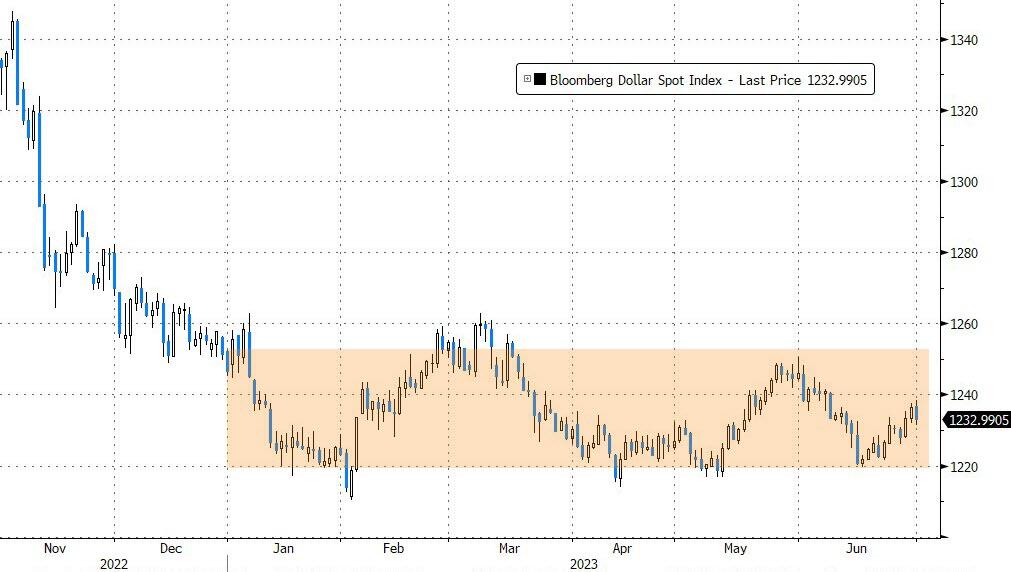
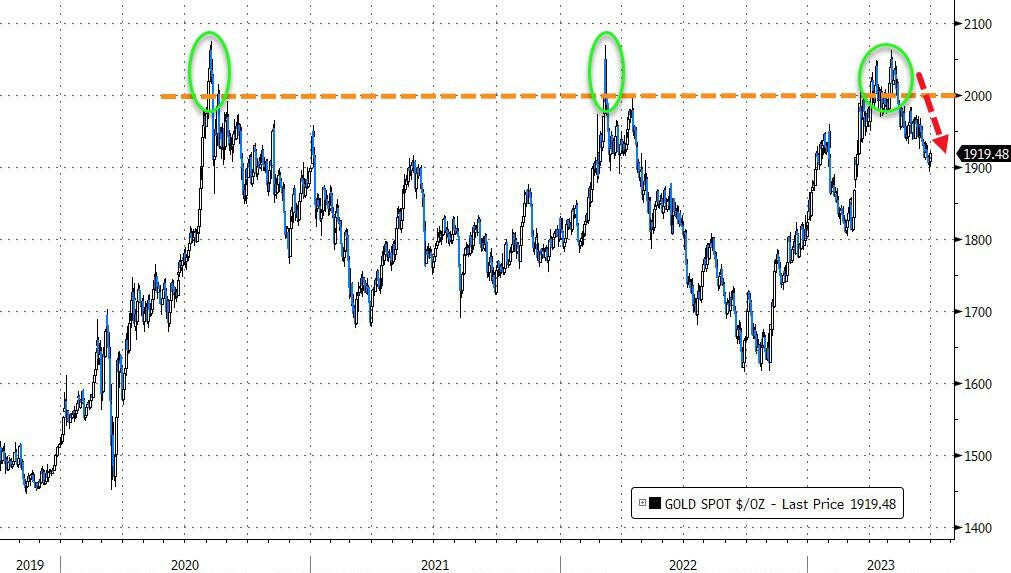
The US Dollar continued its 3-day down trend, which helped Gold to gain +1.06% on the day, as the precious metal found support at its $1,950 level.
Apparently, traders found some encouragement from last week’s modest advances, as well as the fact that we made it through the weekend without another bank collapsing, so they pushed equities moderately higher, but the results were mixed, as the graph above shows.
Never mind that Deutsche Bank (DB) and other fellow European bank shares took a dive on Friday, this morning all was well, and European stocks set the tone for a positive US opening.
While this does not mean the banking crisis has been resolved, far from it, it simply has been put on the back burner for the time being. The dominant reason is that Wall Street is still convinced that the Fed is bluffing and a pause or pivot may be in the near future, as the economy points to stagflation.
The reginal banking index ETF KRE managed to add 1.6%, while some of its components did much better, like First Citizens Bank, which soared over 50%. Helping this rebound was improved market sentiment based on irrational hope of policymakers getting a handle on these challenges. Yeah, right…
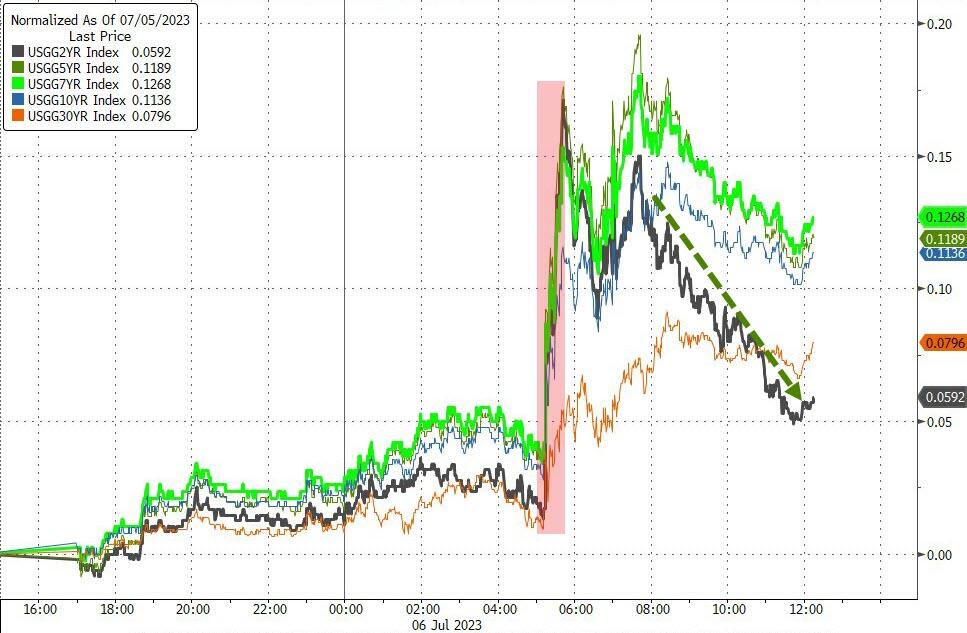
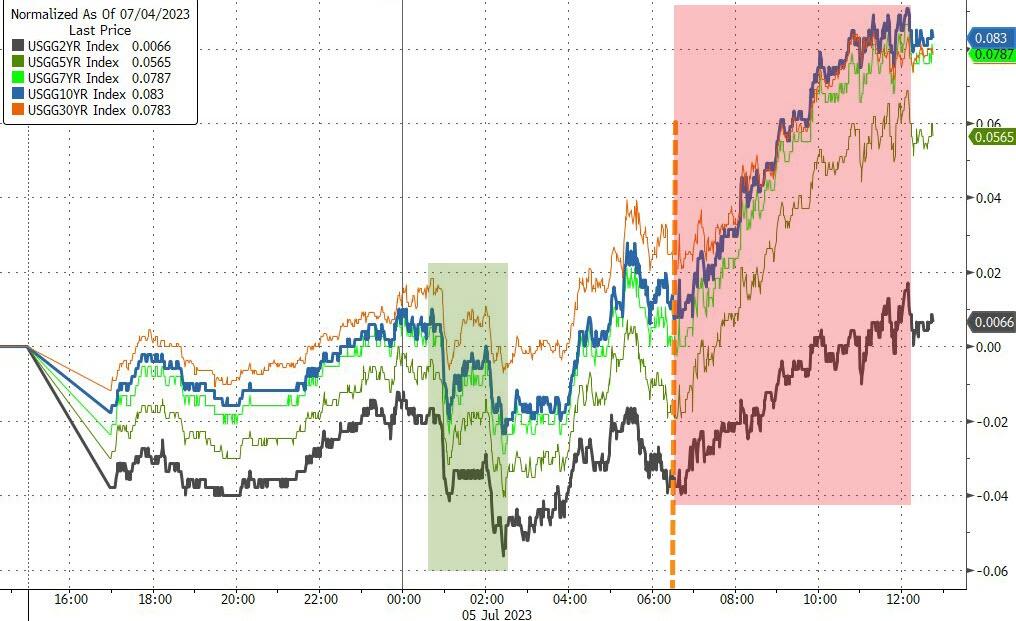
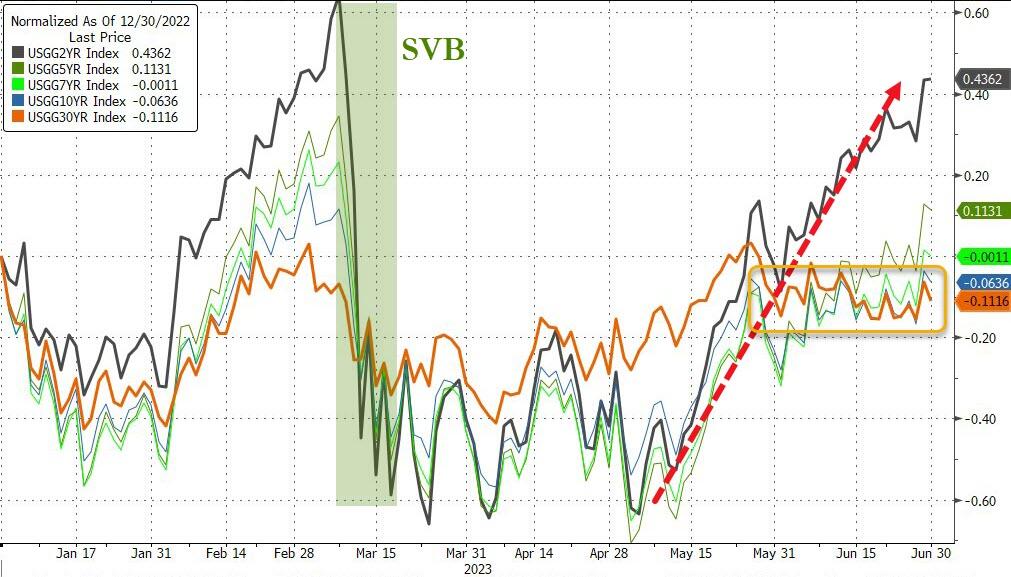
Traders conveniently overlooked the fact that bond yields surged, and rate hike expectations took on a hawkish tone, as ZH pointed out. The 2-year managed to recapture its 4% level, which it had surrendered 5 days ago.
The US Dollar slid -0.26%, as did Gold, with its $2k level currently functioning as overhead resistance. Crude oil went on a rampage and added +5.40% for the session to close at $73.
Our Domestic Trend Tracking Index (TTI-section 3) has climbed again closer towards its long-term trend line. We are still in the neutral zone but will increase our equity holdings, should this dividing line between bullish and bearish territory be solidly broken to the upside.
Over the past two weeks, all attempts have been nothing but head fakes.
Below, you can evaluate the latest High-Volume ETF Cutline report, which shows how far above or below their respective long-term trend lines (39-week SMA) my currently tracked ETFs are positioned.
This report covers the HV ETF Master List from Thursday’s StatSheet and includes 312 High Volume ETFs, defined as those with an average daily volume of more than $5 million, of which currently 143 (last report: 111) are hovering in bullish territory. The yellow line separates those ETFs that are positioned above their trend line (%M/A) from those that have dropped below it.
In case you are not familiar with some of the terminology used in the reports, please read the Glossary of Terms. If you missed the original post about the Cutline approach, you can read it here.
Finally, the much awaited and my opinion top banking cockroach, namely Deutsche Bank (DB), made an appearance with its shares sliding due to the German lenders’ Credit Risk jumping, but without an apparent spark.
With the Credit Suisse debacle fresh on everyone’s mind, traders were “sensitive” to more questionable banking news, so the major indexes took an early bath. As the session wore on, however, DB managed to crawl out of that early 7% hole, which helped the US market reduce their early losses.
European notable voices tried to calm down the situation, as ZeroHedge pointed out:
GERMANY’S SCHOLZ: EUROPEAN BANKING OVERSIGHT IS ROBUST AND STABLE, DEUTSCHE BANK IS `VERY PROFITABLE’, NO REASON FOR WORRY
ECB’S LAGARDE TELLS EU LEADERS EURO AREA BANKING SECTOR STRONG, ECB FULLY EQUIPPED TO PROVIDE LIQUIDITY TO EURO AREA FINANCIAL SYSTEM, IF NEEDED
MACRON: EUROPEAN BANKS HAVE SOLID FUNDAMENTALS
While the day was saved, I think DB will be again the center of attention possibly as early as next week, despite the “impressive” jawboning of the above European leaders.
The regional banks stock index KRE rode the rollercoaster but managed to close around its unchanged line, but some individual banks did not fare so well.
Bond yields were mixed for the week, but the 2-year tumbled way below its 4% level and to its lowest since September 2022.
The US Dollar, despite ending the week lower, showed signs of life today by rallying 0.55%. That pulled Gold off its high, but it’s notable that the precious metal, during this past week, peeked its head twice above the $2,000 mark.
The Fed is clearly caught between a rock and a hard place. Being serious about fighting inflation requires sharply higher interest rates. However, helping a sliding economy and a collapsing banking system has traders and algos convinced that the Fed is forced to pause or pivot.
If they do, inflation will soar, but stocks will initially join in and rally. If they don’t pause, the financial system is likely to crumble.
1. From the universe of over 1,800 ETFs, I have selected only those with a trading volume of over $5 million per day (HV ETFs), so that liquidity and a small bid/ask spread are assured.
2. Trend Tracking Indexes (TTIs)
Buy or Sell decisions for Domestic and International ETFs (section 1 and 2), are made based on the respective TTI and its position either above or below its long-term M/A (Moving Average). A crossing of the trend line from below accompanied by some staying power above constitutes a “Buy” signal. Conversely, a clear break below the line constitutes a “Sell” signal. Additionally, I use a 12% trailing stop loss on all positions in these categories to control downside risk.
3. All other investment arenas do not have a TTI and should be traded based on the position of the individual ETF relative to its own respective trend line (%M/A). That’s why those signals are referred to as a “Selective Buy.” In other words, if an ETF crosses its own trendline to the upside, a “Buy” signal is generated. Here too, I recommend trailing sell stop of 12%, or less, depending on your risk tolerance.
If you are unfamiliar with some of the terminology, please see Glossary of Termsand new subscriber information in section 9.
1. DOMESTIC EQUITY ETFs: BUY — since 12/01/2022
Click on chart to enlarge
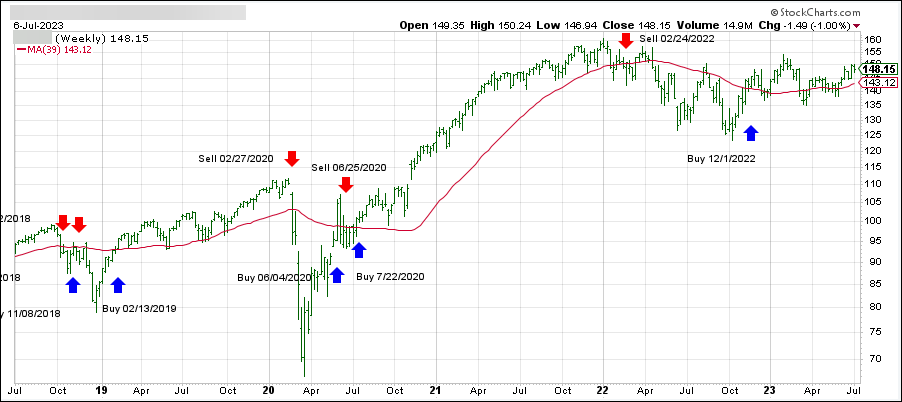
Our main directional indicator, the Domestic Trend Tracking Index (TTI-green line in the above chart) has reclaimed its long-term trend line (red) by -3.13% and remains in “Buy” mode for the time being.
After the Fed pretty much met expectations yesterday with their latest policy on interest rates, which some saw as Powell being in the dovish camp, it was Treasury Secretary Yellen who stole the jam out of the bullish donut by clarifying that a broad increase in deposit insurance may not be in the cards.
Some analysts considered it to be a flip-flop, and the fallout was instant, as the markets crashed into the close, with the Dow plunging 530 points.
Today, it was “opposite day”, as bottom pickers stepped up to the plate and drove the Dow higher by over 450 points, assuming the much hoped for Fed pivot had now become reality. However, suddenly a glass ceiling was hit, the trend reversed and sent the major indexes back into the red. A last hour bounce insured a green close.
It turned out to be another chaotic day with uncertainty reigning supreme and a long-term trend in equities not being discernable.
Fed-watcher Philip Marey summed it up best:
“A final observation. The Fed continues to stumble its way through the fight against inflation. First, they tried to explain inflation away by claiming it was transitory. Consequently, they were late in starting the hiking cycle. Now that they are finally approaching positive territory for the real federal funds rate, they are close to ending the hiking cycle and leaving the rest of the fight against inflation to credit tightening by the banks. Because the Fed in its regulatory role failed to prevent the recent banking turmoil. Failing as a central bank on both fronts, so now it’s up to the banking sector to get inflation under control? What a mess.”
Bond yields were mixed. The 2-year dropped, popped, touched its 4% level, and then really dropped to close at 3.77%. The US Dollar fell for the 6th straight day but bounced into the close.
Again, the hero was Gold, with the precious metal surpassing its $2k level and closing a tad above it. For the day, gold gained +2.63%, YTD it’s up +9.49%, which is way better than the S&P’s meager +2.80%.